An HVAC System in Pharmaceutical Industry is a specialized environmental control system designed to maintain temperature, humidity, air cleanliness, and pressure differentials within pharmaceutical manufacturing areas. HVAC stands for Heating, Ventilation, and Air Conditioning, and it plays a critical role in ensuring product quality, patient safety, and regulatory compliance.
The primary purpose of an HVAC System in Pharmaceutical Industry is to create and maintain controlled environmental conditions that prevent contamination during manufacturing, packaging, storage, and laboratory operations. Since pharmaceutical products are highly sensitive to environmental conditions, even small variations in temperature, humidity, or airborne particles can affect product quality and stability.
A properly designed HVAC System in Pharmaceutical Industry helps control airborne contaminants, maintain cleanroom classifications, regulate air pressure, and ensure compliance with Good Manufacturing Practice (GMP) requirements. Regulatory authorities such as USFDA, WHO, EU GMP, and MHRA require pharmaceutical manufacturers to maintain validated HVAC systems as part of their quality management programs.
In modern pharmaceutical facilities, HVAC systems are considered one of the most critical utility systems because they directly impact product quality, manufacturing efficiency, and regulatory compliance. This guide explains the HVAC System in Pharmaceutical Industry, including its working principle, components, classifications, applications, GMP requirements, maintenance, and validation activities.
What is an HVAC System?
HVAC stands for:
- H – Heating
- V – Ventilation
- A – Air
- C – Conditioning
An HVAC system is an engineered system designed to control indoor environmental conditions by regulating temperature, humidity, airflow, air cleanliness, and pressure.
In pharmaceutical manufacturing, HVAC systems do much more than provide comfort. They protect products from contamination and help maintain clean manufacturing environments.
Why is HVAC Important in Pharmaceutical Industry?
The HVAC System in Pharmaceutical Industry is essential because pharmaceutical products must be manufactured under controlled conditions.
Product Protection
HVAC systems prevent contamination from:
- Dust
- Airborne particles
- Microorganisms
- External pollutants
Personnel Protection
Certain pharmaceutical products may expose workers to hazardous materials.
HVAC systems help:
- Remove contaminants
- Control exposure
- Improve workplace safety
GMP Compliance
Regulatory authorities require controlled environmental conditions during pharmaceutical manufacturing.
Process Consistency
Maintaining consistent environmental conditions helps ensure reproducible manufacturing results.
Cleanroom Operation
Cleanrooms depend on HVAC systems to maintain required cleanliness classifications.
Objectives of HVAC System in Pharmaceutical Industry
The primary objective of an HVAC System in Pharmaceutical Industry is to create and maintain a controlled environment that ensures product quality, personnel safety, and regulatory compliance. The key objectives include:
1. Temperature Control
Temperature control is one of the most important functions of an HVAC system. Pharmaceutical products and manufacturing processes often require specific temperature ranges to maintain product stability and process efficiency.
Proper temperature control helps:
- Maintain product quality
- Prevent degradation of temperature-sensitive materials
- Ensure employee comfort
- Support GMP compliance
Consistent temperature conditions also help achieve reproducible manufacturing results and reduce process variations.
2. Humidity Control
Humidity plays a critical role in pharmaceutical manufacturing. Excessive moisture can affect product stability, while very low humidity may create static electricity and handling issues.
Proper humidity control helps:
- Prevent product degradation
- Protect hygroscopic materials
- Improve process consistency
- Reduce microbial growth risks
Maintaining the correct humidity level is especially important in tablet manufacturing, capsule filling, and packaging operations.
3. Air Filtration
Air filtration removes airborne particles, dust, microorganisms, and other contaminants from the manufacturing environment.
Pharmaceutical HVAC systems use multiple filtration stages, including:
- Pre-filters
- Fine filters
- HEPA filters
Effective air filtration helps maintain cleanroom standards, protect products from contamination, and ensure compliance with regulatory requirements.
4. Pressure Control
Pressure differentials are maintained between rooms to control the movement of air and prevent contamination.
Pressure control helps:
- Prevent cross-contamination
- Protect critical manufacturing areas
- Control airflow direction
- Maintain cleanroom integrity
For example, sterile manufacturing areas are typically maintained under positive pressure to prevent contaminated air from entering the room.
5. Air Distribution
Uniform air distribution ensures that conditioned air reaches all areas of a room evenly.
Proper air distribution helps:
- Maintain consistent temperature and humidity
- Eliminate stagnant air zones
- Improve contamination control
- Enhance employee comfort
Diffusers, ducts, and airflow patterns are carefully designed to achieve effective air distribution throughout pharmaceutical facilities.
6. Contamination Control
Contamination control is one of the most critical objectives of an HVAC system in pharmaceutical manufacturing.
The HVAC system helps control:
- Dust particles
- Microorganisms
- Airborne contaminants
- Cross-contamination between products
Effective contamination control protects product quality, ensures patient safety, and supports compliance with GMP and regulatory requirements.
Key Takeaway
The main objectives of an HVAC System in Pharmaceutical Industry are temperature control, humidity control, air filtration, pressure control, air distribution, and contamination control. Together, these functions create a clean and controlled environment that supports safe pharmaceutical manufacturing, product quality, and regulatory compliance.
Working Principle of HVAC System in Pharmaceutical Industry
The HVAC System in Pharmaceutical Industry works by continuously conditioning and circulating air throughout the facility.
The process generally follows these steps:
- Outside air enters the HVAC system.
- Air passes through filtration stages.
- Air is heated or cooled to the required temperature.
- Humidity is adjusted.
- Conditioned air is supplied to manufacturing areas.
- Return air is collected and recirculated or exhausted.
- Pressure differentials are maintained between rooms.
This continuous cycle ensures controlled environmental conditions.
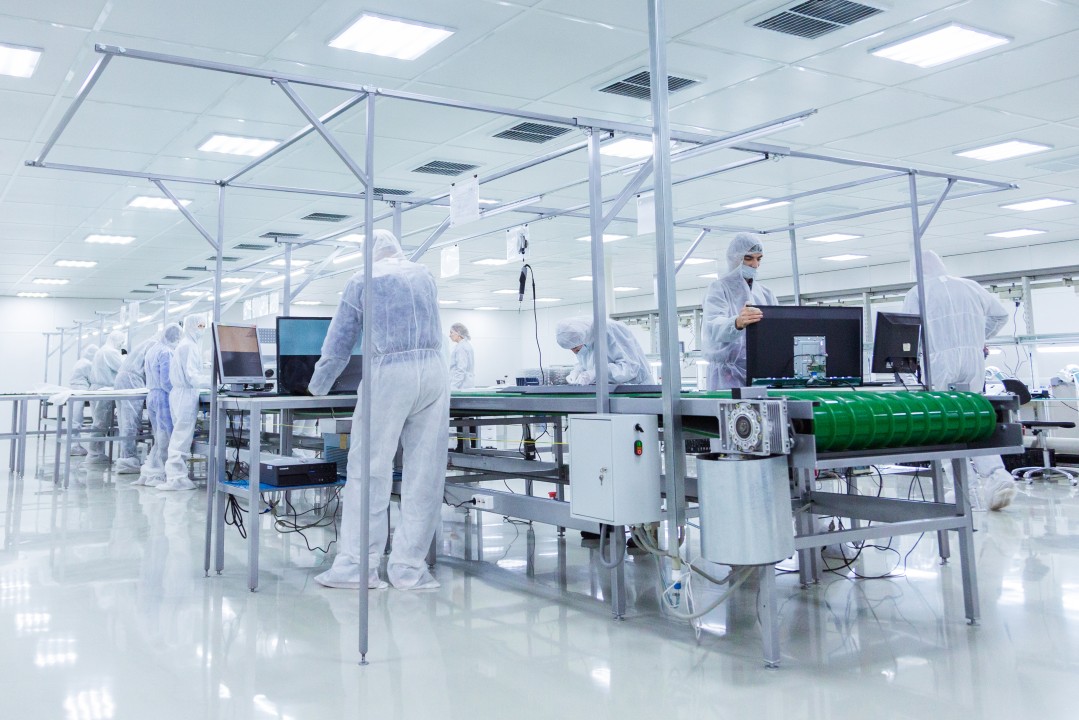
Major Components of HVAC System in Pharmaceutical Industry
An HVAC System in Pharmaceutical Industry consists of several components that work together to maintain temperature, humidity, air cleanliness, and pressure control. Understanding these components helps pharmaceutical professionals operate and maintain the system effectively.
1. Air Handling Unit (AHU)
The Air Handling Unit (AHU) is considered the heart of the HVAC system. It is responsible for conditioning and distributing air throughout the pharmaceutical facility.
The main functions of an AHU include:
- Air filtration
- Air circulation
- Temperature control
- Humidity control
- Air mixing and distribution
The AHU receives fresh and return air, filters it, adjusts its temperature and humidity, and then supplies the conditioned air to manufacturing areas. Proper AHU performance is critical for maintaining cleanroom conditions and GMP compliance.
2. Filters
Filters are used to remove dust, airborne particles, microorganisms, and contaminants from the air before it enters controlled areas.
The filtration system is usually divided into multiple stages to improve efficiency and extend filter life.
3. Cooling Coil
The cooling coil is used to reduce the temperature of incoming air. Chilled water or refrigerant flows through the coil, absorbing heat from the air.
Functions of cooling coils include:
- Reducing air temperature
- Removing excess moisture
- Maintaining room conditions
- Improving process control
Cooling coils are particularly important in pharmaceutical facilities located in warm and humid climates.
4. Heating Coil
The heating coil is used when air needs to be heated before entering manufacturing areas.
Functions include:
- Increasing air temperature
- Maintaining winter operating conditions
- Supporting humidity control
- Preventing excessive cooling
Heating coils help maintain stable environmental conditions throughout the year.
5. Blowers and Fans
Blowers and fans provide the force required to move air through the HVAC system.
Their functions include:
- Supplying conditioned air
- Maintaining airflow rates
- Supporting pressure differentials
- Ensuring proper air circulation
Without properly functioning fans, contamination control and cleanroom performance would be compromised.
6. Ducting System
The ducting system transports conditioned air from the AHU to various rooms and production areas.
A properly designed duct network helps:
- Maintain airflow balance
- Reduce pressure losses
- Improve energy efficiency
- Ensure uniform air distribution
Ducts are typically constructed from galvanized steel or stainless steel depending on the application.
7. Dampers
Dampers are devices installed inside ducts to control airflow.
They help:
- Regulate air volume
- Control room pressure
- Balance airflow
- Improve system efficiency
Dampers play a critical role in maintaining the pressure differentials required in pharmaceutical cleanrooms.
8. Diffusers
Diffusers distribute conditioned air evenly throughout a room.
Benefits of diffusers include:
- Uniform airflow distribution
- Improved comfort
- Reduced turbulence
- Better contamination control
In cleanrooms, specially designed diffusers help maintain laminar airflow patterns.
Types of Filters Used in Pharmaceutical HVAC Systems
Air filtration is one of the most important functions of an HVAC System in Pharmaceutical Industry. Different filter stages are used to progressively remove contaminants from the air.
1. Pre Filter
Pre-filters are the first stage of filtration.
Their primary function is to capture large dust particles and debris before the air reaches more sensitive filters.
Benefits of Pre Filters
- Extend HEPA filter life
- Reduce maintenance costs
- Improve overall filtration efficiency
- Protect downstream equipment
Pre-filters are typically installed at the AHU air intake.
2. Fine Filter
Fine filters provide secondary filtration and remove smaller particles that pass through the pre-filter.
Benefits of Fine Filters
- Improved air cleanliness
- Reduced particle concentration
- Better protection for HEPA filters
- Enhanced HVAC performance
Fine filters serve as an intermediate filtration stage in pharmaceutical HVAC systems.
3. HEPA Filter
HEPA (High-Efficiency Particulate Air) filters are widely used in pharmaceutical cleanrooms and critical manufacturing areas.
A HEPA filter can remove at least 99.97% of airborne particles measuring 0.3 microns.
Advantages of HEPA Filters
High Filtration Efficiency
HEPA filters provide excellent removal of airborne contaminants and particles.
Improved Air Cleanliness
They help maintain cleanroom classifications required by GMP regulations.
Reduced Contamination Risk
HEPA filters significantly reduce the risk of product contamination and microbial contamination.
Regulatory Compliance
HEPA filtration supports compliance with WHO, USFDA, EU GMP, and other pharmaceutical regulatory requirements.
Because of these advantages, HEPA filters are considered a critical component of pharmaceutical HVAC systems.
4. ULPA Filter
ULPA stands for Ultra-Low Penetration Air Filter.
These filters provide even higher filtration efficiency than HEPA filters and are used in highly critical process parameters and biotechnology applications.
Advantages of ULPA Filters
- Extremely high filtration efficiency
- Superior contamination control
- Suitable for highly sensitive processes
- Improved cleanroom performance
ULPA filters are commonly used in aseptic manufacturing areas, sterile filling operations, and advanced biotechnology facilities where the highest level of air cleanliness is required.
Cleanroom Classification and HVAC
Cleanrooms require strict environmental control.
HVAC systems help maintain:
- Particle limits
- Air changes
- Pressure differentials
- Temperature
- Humidity
Common classifications include:
- ISO Class 5
- ISO Class 6
- ISO Class 7
- ISO Class 8
The required classification depends on manufacturing operations.
Pressure Differentials in Pharmaceutical HVAC Systems
Pressure control is essential for contamination prevention.
Positive Pressure
Used in sterile manufacturing areas.
Benefits:
- Prevents entry of contaminants
- Protects products
Negative Pressure
Used when handling hazardous materials.
Benefits:
- Prevents contaminants from escaping
Air Changes Per Hour (ACH)
ACH represents the number of times air is replaced within a room each hour.
Higher ACH values provide:
- Better contamination control
- Improved cleanliness
- Faster particle removal
ACH requirements vary depending on room classification.
Applications of HVAC System in Pharmaceutical Industry
The HVAC System in Pharmaceutical Industry is used in almost every area of a pharmaceutical facility. Its primary purpose is to maintain controlled environmental conditions that ensure product quality, personnel safety, and regulatory compliance. Different areas require different levels of temperature, humidity, filtration, and pressure control depending on the manufacturing activity being performed.
1. Production Areas
Production areas are the most critical sections of a pharmaceutical plant where products are manufactured, processed, and handled.
The HVAC system helps maintain:
- Controlled temperature and humidity
- Air cleanliness
- Pressure differentials
- Contamination-free conditions
Proper environmental control ensures consistent product quality and minimizes the risk of contamination during manufacturing operations.
2. Sterile Areas
Sterile manufacturing areas require the highest level of environmental control because products are manufactured under aseptic conditions.
The HVAC system supports sterile operations by:
- Providing HEPA-filtered air
- Maintaining positive pressure
- Controlling airborne particles
- Reducing microbial contamination
These controls are essential for injectable products, ophthalmic preparations, and other sterile pharmaceutical products where contamination can have serious consequences.
3. Packaging Areas
Packaging is the final stage of pharmaceutical manufacturing before products are distributed to the market.
HVAC systems help:
- Maintain suitable temperature and humidity
- Prevent dust accumulation
- Protect packaging materials
- Ensure product stability
Proper environmental conditions in packaging areas help preserve product quality and extend shelf life.
4. Warehouses and Storage Areas
Warehouses are used for storing raw materials, packaging materials, intermediates, and finished products.
The HVAC system helps maintain:
- Required storage temperatures
- Controlled humidity levels
- Product stability
- Regulatory compliance
Temperature-sensitive products particularly depend on effective HVAC control to prevent degradation during storage.
5. Quality Control Laboratories
Quality Control (QC) laboratories perform testing of raw materials, in-process samples, and finished products.
HVAC systems provide:
- Stable environmental conditions
- Controlled temperature and humidity
- Clean working environments
- Reliable testing conditions
Maintaining consistent laboratory conditions helps ensure accurate and reproducible analytical results.
6. Microbiology Laboratories
Microbiology laboratories handle microorganisms and perform environmental monitoring, sterility testing, and microbial analysis.
The HVAC system helps:
- Control contamination risks
- Maintain proper airflow patterns
- Prevent cross-contamination
- Protect laboratory personnel
In many cases, microbiology laboratories use specialized pressure differentials and filtration systems to ensure safe operations.
7. Research and Development (R&D) Areas
Research and Development departments conduct formulation development, process optimization, and product testing.
HVAC systems support R&D activities by:
- Maintaining stable environmental conditions
- Protecting sensitive materials
- Ensuring accurate experimental results
- Supporting product development activities
8. Dispensing Areas
Dispensing areas are used for weighing and dispensing raw materials before manufacturing.
The HVAC system helps:
- Control dust generation
- Prevent cross-contamination
- Maintain cleanliness
- Protect operators from exposure
Proper airflow and filtration are critical in dispensing areas to maintain GMP compliance.
9. Tablet and Capsule Manufacturing Areas
Tablet compression and capsule filling operations generate dust particles that can contaminate products and equipment.
HVAC systems help:
- Remove airborne dust
- Maintain room cleanliness
- Control temperature and humidity
- Improve product quality
These controls are especially important for hygroscopic products that are sensitive to moisture.
10. Aseptic Filling Areas
Aseptic filling operations require some of the strictest environmental controls in the pharmaceutical industry.
The HVAC system provides:
- HEPA-filtered air
- Laminar airflow
- Positive pressure environments
- Particle-controlled conditions
These measures help ensure sterility and patient safety.
Importance of HVAC Applications in Pharma
Regardless of the area, the HVAC System in Pharmaceutical Industry plays a critical role in:
- Product quality assurance
- Contamination control
- Employee safety
- Regulatory compliance
- Process consistency
- Cleanroom performance
Without an effective HVAC system, pharmaceutical manufacturers would struggle to maintain GMP standards and produce safe, high-quality products consistently.
GMP Requirements for HVAC System in Pharmaceutical Industry
HVAC systems must comply with GMP guidelines.
Key requirements include:
- Documented design
- Qualified equipment
- Validated performance
- Controlled maintenance
- Calibration programs
- Environmental monitoring
HVAC Qualification
HVAC systems undergo qualification to demonstrate fitness for intended use.
- Design Qualification (DQ):- Verifies design suitability.
- Installation Qualification (IQ:- Confirms correct installation.
- Operational Qualification (OQ):- Verifies operational performance.
- Performance Qualification (PQ):- Demonstrates consistent performance.
Environmental Monitoring
Environmental monitoring verifies HVAC effectiveness.
Parameters include:
- Non-viable particles
- Viable microorganisms
- Temperature
- Humidity
- Pressure differentials
Advantages of HVAC System in Pharmaceutical Industry
- Improved Product Quality:- Supports contamination control.
- Regulatory Compliance:-Helps meet GMP requirements.
- Better Process Control:- Maintains consistent environmental conditions.
- Worker Safety:- Reduces exposure to contaminants.
- Cleanroom Support:- Maintains required cleanliness classifications.
Maintenance of Pharmaceutical HVAC Systems
Regular maintenance includes:
- Filter replacement
- AHU inspection
- Coil cleaning
- Fan maintenance
- Calibration
- Airflow verification
Proper maintenance ensures reliable performance and GMP compliance.
Conclusion
The HVAC System in Pharmaceutical Industry is one of the most critical utility systems used to maintain temperature, humidity, air cleanliness, airflow, and pressure differentials within pharmaceutical facilities. It plays a vital role in contamination control, cleanroom operation, product protection, and GMP compliance.
From sterile manufacturing areas to quality control laboratories, HVAC systems help create controlled environments that support safe and effective pharmaceutical production. By understanding the HVAC System in Pharmaceutical Industry, pharmaceutical professionals can improve operational efficiency, maintain regulatory compliance, and ensure the consistent manufacture of high-quality pharmaceutical products.
Frequently Asked Questions (FAQs)
Q1. What is HVAC in pharmaceutical industry?
HVAC stands for Heating, Ventilation, and Air Conditioning. It controls temperature, humidity, cleanliness, airflow, and pressure within pharmaceutical facilities.
Q2. Why is HVAC important in pharmaceutical manufacturing?
HVAC systems help prevent contamination, maintain cleanrooms, ensure GMP compliance, and protect product quality.
Q3. What is the role of HEPA filters in pharmaceutical HVAC systems?
HEPA filters remove at least 99.97% of airborne particles measuring 0.3 microns.
Q4. What is positive pressure in pharmaceutical cleanrooms?
Positive pressure prevents contaminated air from entering critical manufacturing areas.
Q5. What is HVAC qualification?
HVAC qualification is the process of verifying that the HVAC system is designed, installed, operated, and performs according to GMP requirements.
Q6. Which areas require HVAC control in pharmaceutical plants?
Production areas, sterile areas, packaging rooms, warehouses, laboratories, and cleanrooms all require HVAC control.