A Heat Exchanger is a mechanical device designed to transfer heat from one fluid to another without allowing the two fluids to mix. Heat exchangers are among the most important pieces of equipment used in pharmaceutical manufacturing because many production processes require precise temperature control to maintain product quality, process efficiency, and regulatory compliance.f
The basic principle of a Heat Exchanger is simple: heat naturally flows from a hotter fluid to a colder fluid through a solid surface. This process allows heating or cooling of pharmaceutical products, utilities, and process streams while preventing contamination between fluids. Because of their efficiency and reliability, heat exchangers are widely used in purified water systems, Water for Injection (WFI) systems, clean steam generation, HVAC systems, reactors, fermentation processes, and many other pharmaceutical applications.
In the pharmaceutical industry, temperature control is critical for product stability, chemical reactions, sterilization, cleaning operations, and environmental control. A properly designed Heat Exchanger helps maintain consistent process conditions, improve energy efficiency, reduce operating costs, and support Good Manufacturing Practice (GMP) requirements.
Understanding how a Heat Exchanger works is essential for pharmaceutical engineers, production personnel, maintenance teams, validation professionals, and students preparing for pharma industry careers. This comprehensive guide explains the working principle, components, types, applications, advantages, maintenance requirements, and GMP considerations of heat exchangers used in pharmaceutical plants.
What is a Heat Exchanger?
A Heat Exchanger is equipment used to transfer thermal energy between two fluids that are at different temperatures. The fluids may be liquids, gases, or a combination of both. During operation, heat flows from the hotter fluid to the colder fluid through a metal barrier that separates the two streams.
The main purpose of a Heat Exchanger is to achieve efficient heating or cooling without direct contact between the fluids. This separation is particularly important in pharmaceutical manufacturing where contamination control and product purity are critical requirements.
Heat exchangers are designed to maximize heat transfer while minimizing energy losses. Their performance depends on factors such as temperature difference, flow rate, heat transfer surface area, and material of construction.
In pharmaceutical facilities, heat exchangers are commonly installed in:
- Purified Water Systems
- Water for Injection (WFI) Systems
- Clean Steam Systems
- HVAC Systems
- Reactors
- Mixing Vessels
- Fermentation Units
- Utility Plants
Without an efficient Heat Exchanger, many pharmaceutical manufacturing processes would become difficult to control and operate safely.
Why Are Heat Exchangers Used in Pharma Industry?
The pharmaceutical industry relies heavily on accurate temperature control. Many manufacturing operations require specific temperatures to ensure product quality, process efficiency, and regulatory compliance.
A Heat Exchanger helps pharmaceutical manufacturers achieve these objectives by providing controlled heating and cooling.
1. Product Quality Protection
Many pharmaceutical products are temperature-sensitive. Excessive heat or insufficient cooling can affect product stability, potency, and shelf life.
Heat exchangers help maintain optimal process temperatures and protect product quality.
2. Energy Efficiency
Modern pharmaceutical plants focus on reducing energy consumption and operating costs. A Heat Exchanger recovers and reuses thermal energy, improving overall plant efficiency.
3. Process Control
Chemical reactions, mixing operations, and fermentation processes often require strict temperature control. Heat exchangers provide consistent and reliable temperature management.
4. GMP Compliance
Good Manufacturing Practice (GMP) regulations require controlled manufacturing conditions. Heat exchangers help maintain validated operating parameters and support regulatory compliance.
5. Utility System Operation
Critical pharmaceutical utilities such as purified water, WFI, clean steam, and HVAC systems depend on heat exchangers for proper operation.
Heat Exchanger Working Principle
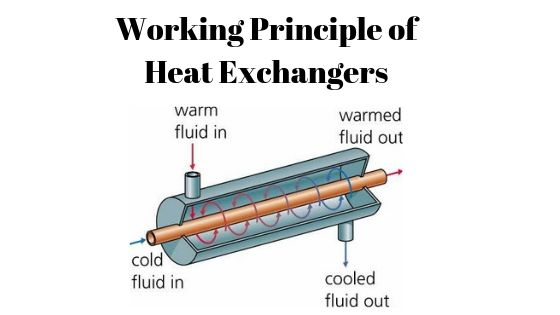
The working principle of a Heat Exchanger is based on heat transfer from a higher-temperature fluid to a lower-temperature fluid through a solid surface.
Heat transfer occurs through:
Conduction
Heat passes through the metal wall separating the two fluids.
Convection
Heat is transferred between the fluid and the heat transfer surface.
Overall Heat Transfer
The combination of conduction and convection allows efficient transfer of thermal energy between process streams.
Step-by-Step Working Process
- A hot fluid enters the heat exchanger.
- A cold fluid enters a separate channel.
- The fluids remain physically separated.
- Heat flows through the metal surface.
- The hot fluid loses heat and cools down.
- The cold fluid gains heat and becomes warmer.
- Both fluids exit the heat exchanger at modified temperatures.
This simple process forms the basis of every Heat Exchanger used in pharmaceutical manufacturing.
Main Components of a Heat Exchanger
To understand how a Heat Exchanger operates, it is important to understand its major components. Each component plays a critical role in ensuring efficient heat transfer and reliable system performance.
1. Heat Transfer Surface
The heat transfer surface is the most important part of a Heat Exchanger. It is the area through which heat moves from the hot fluid to the cold fluid.
Depending on the type of heat exchanger, the heat transfer surface may consist of:
- Metal plates
- Tubes
- Coils
- Finned surfaces
The larger the heat transfer surface area, the higher the heat transfer efficiency.
2. Inlet and Outlet Connections
Every Heat Exchanger contains inlet and outlet connections for both hot and cold fluids.
These connections ensure:
- Controlled fluid flow
- Proper temperature regulation
- Efficient heat transfer
The design of inlet and outlet nozzles affects overall system performance.
3. Tubes or Plates
Most pharmaceutical heat exchangers use either tubes or plates.
Tubes: Tube bundles are commonly used in shell-and-tube heat exchangers.
Plates: Thin stainless-steel plates are used in plate heat exchangers to maximize heat transfer efficiency.
4. Gaskets and Seals
Gaskets prevent leakage between process streams and maintain separation of fluids.
In pharmaceutical applications, gaskets must be:
- Chemically resistant
- Temperature resistant
- GMP compliant
5. Shell or Frame
The shell or frame provides structural support and protects internal components from external damage.
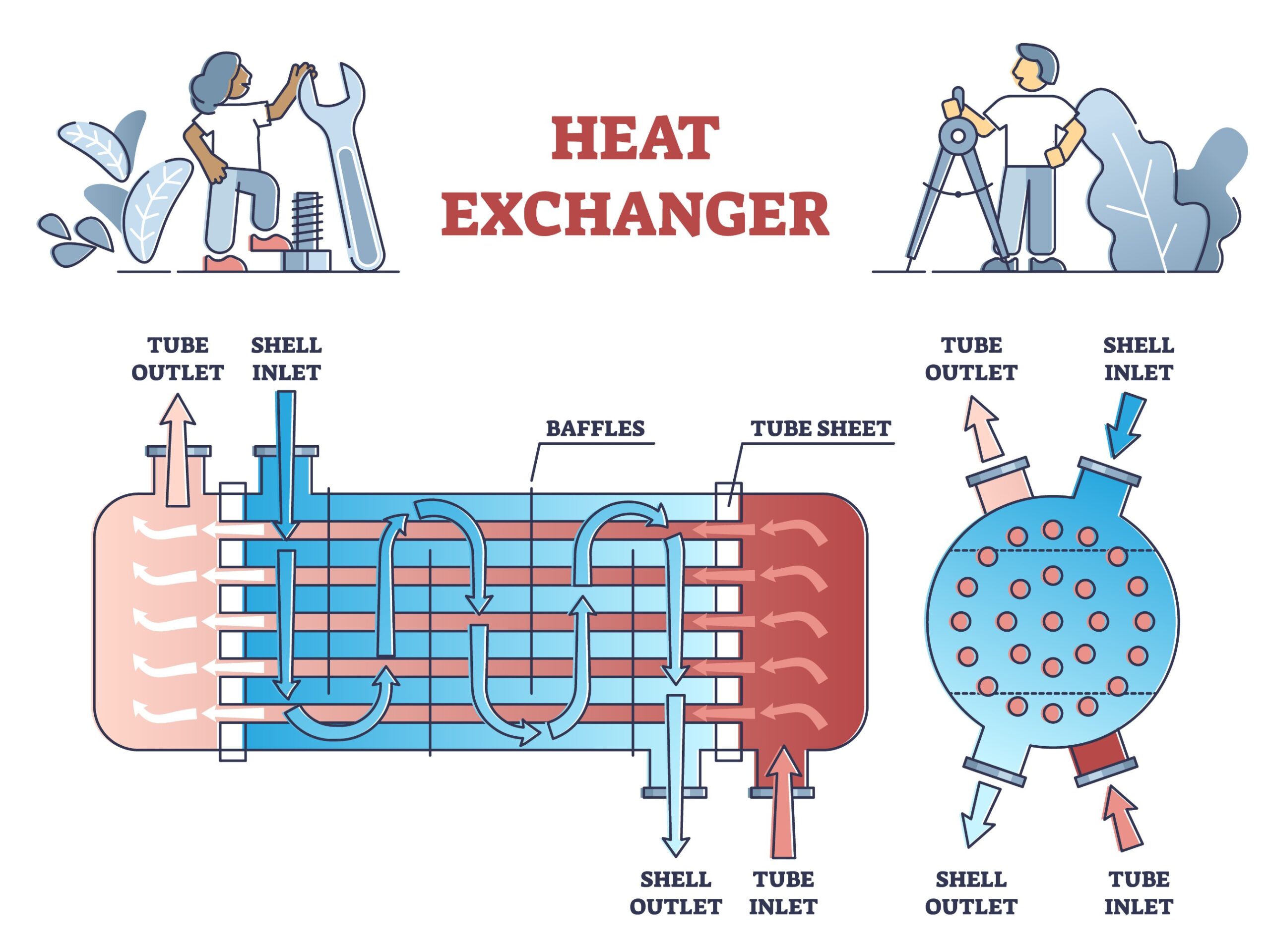
6. Baffles
Baffles are used primarily in shell-and-tube heat exchangers.
Their functions include:
- Directing fluid flow
- Increasing turbulence
- Improving heat transfer efficiency
7. Support Structure
The support structure holds the Heat Exchanger securely in place and helps absorb operational stresses.
Types of Heat Exchangers Used in Pharma Industry
Several types of Heat Exchangers are used in pharmaceutical facilities depending on process requirements, operating conditions, and utility systems.
1. Plate Heat Exchanger
The Plate Heat Exchanger is one of the most widely used heat exchangers in pharmaceutical manufacturing.
It consists of a series of thin metal plates arranged together in a frame.
Working Principle
Hot and cold fluids flow through alternate channels between the plates.
Heat transfers through the stainless-steel plates without mixing the fluids.
Advantages
- High heat transfer efficiency
- Compact design
- Easy maintenance
- Low space requirement
- High energy efficiency
Applications
Plate Heat Exchangers are commonly used in:
- Purified Water Systems
- HVAC Systems
- Product Cooling
- Product Heating
- Utility Systems
Example
A pharmaceutical purified water loop may use a Plate Heat Exchanger to cool water after thermal sanitization.
2. Shell and Tube Heat Exchanger
The Shell and Tube Heat Exchanger is one of the oldest and most reliable heat exchanger designs.
It consists of:
- A cylindrical shell
- Multiple tubes inside the shell
Working Principle
One fluid flows through the tubes while the second fluid flows around the tubes inside the shell.
Heat transfers through the tube walls.
Advantages
- Suitable for high pressures
- Suitable for high temperatures
- Durable construction
- Long service life
Applications
Shell and Tube Heat Exchangers are commonly used in:
- Clean Steam Systems
- Water for Injection Systems
- Utility Plants
- Large-Scale Manufacturing Processes
Example
A clean steam generator may use a Shell and Tube Heat Exchanger to transfer heat from plant steam to purified water.
3. Double Pipe Heat Exchanger
A Double Pipe Heat Exchanger consists of one pipe placed inside another pipe.
Working Principle
- Hot fluid flows through one pipe.
- Cold fluid flows through the surrounding pipe.
- Heat transfers through the pipe wall.
Advantages
- Simple design
- Easy installation
- Low maintenance
Applications
Double Pipe Heat Exchangers are commonly found in:
- Small pharmaceutical plants
- Pilot facilities
- Laboratory operations
4. Air-Cooled Heat Exchanger
An Air-Cooled Heat Exchanger uses ambient air as the cooling medium.
Working Principle
Process fluid flows through finned tubes while fans force air across the tube surfaces.
Heat transfers from the fluid to the surrounding air.
Advantages
- No cooling water required
- Lower water consumption
- Reduced utility costs
Applications
Air-Cooled Heat Exchangers are used in:
- Utility systems
- Outdoor installations
- Process cooling applications
5. Spiral Heat Exchanger
A Spiral Heat Exchanger consists of two spiral channels formed around a central core.
Advantages
- Compact design
- High heat transfer efficiency
- Suitable for viscous fluids
Applications
Although less common, spiral heat exchangers may be used in specialized pharmaceutical processes.
How to Select the Right Heat Exchanger
Selecting the correct Heat Exchanger depends on several factors.
Temperature Requirements
The required heating or cooling duty determines the type and size of the Heat Exchanger.
Fluid Characteristics
Engineers must consider:
- Viscosity
- Corrosiveness
- Cleanliness
- Flow rate
Pressure Conditions
High-pressure applications often require Shell and Tube Heat Exchangers.
Space Availability
Limited installation space often favors Plate Heat Exchangers.
GMP Requirements
Pharmaceutical applications require equipment that can be cleaned, sanitized, and validated according to GMP standards.
Because of their cleanability and efficiency, Plate Heat Exchangers are frequently preferred in pharmaceutical manufacturing.
Applications of Heat Exchanger in Pharma Industry
A Heat Exchanger is used throughout pharmaceutical manufacturing facilities because many processes require controlled heating or cooling. From water systems to production equipment, heat exchangers help maintain the temperatures needed for efficient operation and product quality with the process flow diagram (PFD).
1. Purified Water Systems
Purified water is one of the most important utilities in pharmaceutical manufacturing.
Heat exchangers are used to:
- Cool purified water after sanitization
- Maintain loop temperatures
- Improve energy efficiency
- Prevent microbial growth
For example, purified water circulating at high temperatures can be cooled using a Plate Heat Exchanger before distribution to manufacturing areas.
2. Water for Injection (WFI) Systems
WFI systems require strict temperature control to maintain water quality and regulatory compliance.
Heat exchangers help:
- Cool generated WFI
- Maintain storage temperatures
- Support thermal sanitization
Because WFI is a critical utility, pharmaceutical companies use high-quality stainless-steel Heat Exchangers that meet GMP requirements.
3. Clean Steam Generation
Clean steam is widely used for sterilization and SIP (Steam-In-Place) operations.
Heat exchangers are used to:
- Generate clean steam
- Recover heat energy
- Improve utility efficiency
- Condense steam when required
Efficient heat transfer is essential for maintaining sterilization effectiveness.
4. HVAC Systems
HVAC systems control environmental conditions in pharmaceutical facilities.
Heat exchangers help:
- Cool incoming air
- Recover heat from exhaust air
- Maintain room temperatures
- Improve energy efficiency
Proper HVAC performance supports GMP compliance and cleanroom operation.
5. Reactor Temperature Control
Many pharmaceutical reactions require precise temperature control.
Heat exchangers help reactors:
- Remove excess heat
- Supply process heat
- Maintain reaction temperatures
- Improve product consistency
Temperature control directly affects reaction yield and product quality.
6. Fermentation Processes
Biotechnology and fermentation facilities rely on Heat Exchangers to control biological processes.
Heat exchangers help maintain the temperatures required for microorganism growth and product formation in the basis of P&ID.
7. Product Cooling and Heating
Many pharmaceutical products require controlled heating or cooling during manufacturing.
Heat exchangers provide:
- Uniform temperature distribution
- Reduced processing time
- Improved product stability
GMP Requirements for Heat Exchangers
Pharmaceutical Heat Exchangers must comply with Good Manufacturing Practice (GMP) requirements.
Material of Construction
Product-contact surfaces should generally be manufactured from:
- Stainless Steel 316L
This material provides excellent corrosion resistance and cleanability.
Surface Finish
Smooth internal surfaces reduce contamination risks and improve cleaning effectiveness.
Cleanability
Heat exchangers should support:
- Cleaning-In-Place (CIP)
- Sanitization procedures
- Validation activities
Documentation
Pharmaceutical companies should maintain:
- Design documents
- Qualification protocols
- Maintenance records
- Calibration records
- Validation reports
Change Control
Any modification to a Heat Exchanger should follow approved change-control procedures.
Maintenance of Heat Exchangers
Proper maintenance helps maximize Heat Exchanger performance and service life.
Regular Inspection
Inspect:
- Plates
- Tubes
- Gaskets
- Connections
for signs of wear or damage.
Cleaning
Regular cleaning removes:
- Scale
- Deposits
- Product residues
- Microbial contamination
Leak Testing
Periodic leak testing helps identify damaged seals and gaskets.
Performance Monitoring
Monitor:
- Temperature differences
- Flow rates
- Pressure drops
Unexpected changes may indicate fouling or equipment problems.
Common Problems and Troubleshooting
Reduced Heat Transfer Efficiency
Causes
- Fouling
- Scale buildup
- Low flow rates
Solution
Clean the Heat Exchanger and verify operating conditions.
Leakage
Causes
- Damaged gaskets
- Corrosion
- Mechanical damage
Solution
Replace defective components.
Excessive Pressure Drop
Causes
- Blocked channels
- Fouling
- Valve restrictions
Solution
Inspect and clean the system.
Temperature Control Problems
Causes
- Instrument failure
- Incorrect flow rates
- Control valve malfunction
Solution
Verify instrumentation and process settings.
Heat Exchanger Interview Questions
Q1. What is a Heat Exchanger?
A Heat Exchanger is a device that transfers heat between two fluids without allowing them to mix.
Q2. What is the working principle of a Heat Exchanger?
A Heat Exchanger works by transferring heat from a hot fluid to a cold fluid through a solid surface.
Q3. Why are Heat Exchangers important in pharmaceutical plants?
They provide temperature control, improve energy efficiency, maintain product quality, and support GMP compliance.
Q4. Which Heat Exchanger is commonly used in pharmaceutical industries?
Plate Heat Exchangers and Shell and Tube Heat Exchangers are commonly used.
Q5. What material is used for pharmaceutical Heat Exchangers?
Stainless Steel 316L is the most commonly used material because of its corrosion resistance and GMP suitability.
Frequently Asked Questions (FAQs)
Q1. What is a Heat Exchanger?
A Heat Exchanger is a mechanical device used to transfer heat from one fluid to another without direct mixing of the fluids.
Q2. Why is a Heat Exchanger used in the pharmaceutical industry?
Heat exchangers are used for heating, cooling, sterilization, temperature control, and utility system operation in pharmaceutical facilities.
Q3. What are the main types of Heat Exchangers?
The main types include:
- Plate Heat Exchanger
- Shell and Tube Heat Exchanger
- Double Pipe Heat Exchanger
- Air-Cooled Heat Exchanger
Q4. Which Heat Exchanger is best for pharmaceutical applications?
Plate Heat Exchangers are widely preferred because they offer high efficiency, compact design, and easy cleaning.
Q5. How does a Heat Exchanger improve energy efficiency?
A Heat Exchanger transfers heat between fluids, reducing the need for additional heating or cooling energy.
Q6. What are the common applications of Heat Exchangers in pharma plants?
Applications include:
- Purified Water Systems
- WFI Systems
- Clean Steam Generation
- HVAC Systems
- Reactor Temperature Control
- Product Heating and Cooling
Conclusion
A Heat Exchanger is one of the most important pieces of equipment used in pharmaceutical manufacturing. It transfers heat between two fluids without allowing them to mix, making it essential for temperature control, energy efficiency, and product quality.
Heat exchangers are widely used in purified water systems, Water for Injection systems, clean steam generation, HVAC operations, reactors, and many other pharmaceutical processes. Their ability to provide accurate heating and cooling helps pharmaceutical companies maintain GMP compliance, improve process efficiency, and ensure consistent manufacturing performance.
By understanding the working principle, components, types, applications, advantages, and maintenance requirements of a Heat Exchanger, pharmaceutical professionals can optimize plant operations and support the production of safe, effective, and high-quality pharmaceutical products.