Impurity Formation and Control in API is one of the most critical aspects of pharmaceutical manufacturing and quality assurance. Active Pharmaceutical Ingredients (APIs) must meet strict regulatory and quality standards before they can be used in drug products. Even trace-level impurities can impact drug safety, efficacy, and stability.
In modern pharmaceutical industries, controlling impurities is not just a regulatory requirement—it is a fundamental responsibility to ensure patient safety. Regulatory authorities such as ICH, USFDA, and EMA have established stringent guidelines to monitor and limit impurities in APIs.
This comprehensive guide explains impurity formation mechanisms, types, regulatory expectations, analytical methods, and practical control strategies used in real-world pharmaceutical manufacturing.
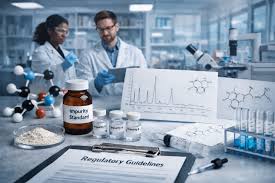
What is Impurity Formation and Control in API?
Impurity Formation and Control in API refers to the identification, monitoring, and reduction of unwanted substances present in an Active Pharmaceutical Ingredient.
Impurities can originate during synthesis, processing, storage, or even packaging. These substances may be toxic, reactive, or inactive, but their presence must always be controlled within acceptable limits.
Effective impurity control ensures:
- Drug safety
- Product consistency
- Regulatory compliance
- Process reliability
Types of Impurities in API
Understanding impurity classification is essential for effective Impurity Formation and Control in API. Proper classification helps in identifying the source, assessing risk, and applying appropriate control strategies during pharmaceutical manufacturing.
1. Organic Impurities
Organic impurities are the most common and arise during synthesis or degradation.
Examples include:
- Starting materials
- Intermediates
- By-products
- Degradation products
These impurities are often structurally related to the API and may be difficult to remove.
Organic impurities are typically formed due to incomplete reactions, side reactions, or over-reactions during chemical synthesis. In multi-step semi-synthesis api processes, each step has the potential to introduce new impurities or carry forward existing ones. Additionally, degradation of the API during storage—caused by heat, light, or moisture—can also generate organic impurities.
Because of their structural similarity to the API, separation and purification can be challenging. Advanced purification techniques such as recrystallization or chromatography are often required. Careful process design and optimization play a critical role in minimizing their formation.
2. Inorganic Impurities
These impurities originate from inorganic sources such as:
- Reagents and catalysts
- Heavy metals
- Residual salts
Though not structurally related, they can be toxic and must be tightly controlled.
Inorganic impurities are usually introduced during the manufacturing process through the use of catalysts, reagents, or processing aids. For example, metal catalysts used in reactions can leave behind trace amounts of heavy metals such as palladium, platinum, or nickel. Similarly, residual salts may remain after neutralization steps.
Even though these impurities are not chemically similar to the API, their presence can significantly impact product safety and stability. Regulatory guidelines such as ICH Q3D strictly define acceptable limits for elemental impurities. Removal techniques such as filtration, washing, and ion-exchange processes are commonly used to control inorganic impurities.
3. Residual Solvents
Residual solvents are volatile organic chemicals used during manufacturing.
Examples:
- Methanol
- Ethanol
- Acetone
Control is required as per ICH Q3C guidelines.
Residual solvents are not completely removed during drying or purification processes and may remain in trace amounts in the final API. These solvents are often used for reactions, extraction, or crystallization due to their ability to dissolve various compounds.
Depending on their toxicity, residual solvents are classified into different categories (Class 1, 2, and 3) under ICH guidelines. Some solvents are highly toxic and must be avoided, while others are permitted within specified limits. Proper drying techniques, vacuum processes, and solvent selection are key strategies to minimize their presence.
Monitoring residual solvents is essential not only for regulatory compliance but also to ensure patient safety and product stability.
4. Genotoxic Impurities
Genotoxic impurities are highly critical due to their ability to damage DNA.
They require strict control even at ppm levels under ICH M7 guidelines.
Genotoxic impurities can interact with genetic material and potentially cause mutations, cancer, or other serious health issues. These impurities may originate from raw materials, intermediates, or specific reagents used during synthesis.
Due to their high risk, regulatory authorities require a risk-based approach for their identification and control. Even extremely low levels (parts per million or parts per billion) must be evaluated and justified. Advanced analytical techniques such as LC-MS/MS are often used for their detection.
Control strategies include modifying the synthesis route, selecting safer reagents, and implementing robust purification steps. A thorough understanding of chemical pathways is essential to prevent the formation of genotoxic impurities.
Sources of Impurity Formation in API
Impurity Formation and Control in API depends heavily on understanding where impurities originate.
1. Raw Materials
Impurities may be introduced from:
- Low-quality starting materials
- Contaminated reagents
- Supplier variability
2. Chemical Reactions
During synthesis:
- Side reactions occur
- Incomplete reactions leave residues
- Over-reactions form unwanted compounds
3. Process Conditions
Parameters such as:
- Temperature
- Pressure
- pH
- Reaction time
can significantly influence impurity formation.
4. Equipment and Utilities
- Cross-contamination
- Equipment corrosion
- Cleaning residues
5. Storage and Stability
Degradation may occur due to:
- Heat
- Light
- Moisture
- Oxygen
Mechanisms of Impurity Formation
Understanding the mechanisms behind impurity generation is essential for effective Impurity Formation and Control in API. These mechanisms explain how and why impurities are formed during synthesis, processing, and storage, allowing pharmaceutical professionals to design better control strategies.
1. Side Reactions
Unintended reactions produce by-products that remain with the API.
Side reactions occur when reactants follow alternative reaction pathways instead of the desired one. These reactions are common in complex chemical syntheses where multiple reactive sites exist. Factors such as improper temperature control, incorrect pH, or excess reagents can promote side reactions.
The by-products formed may have chemical structures similar to the API, making them difficult to separate during purification. Careful optimization of reaction conditions and use of selective catalysts can help minimize side reactions.
2. Over-Reaction
Excess reaction time or conditions can further convert the API into impurities.
Over-reaction happens when the desired product continues to react beyond its intended stage. This usually occurs due to prolonged reaction time, high temperature, or excess reactants. As a result, the API may degrade or transform into secondary unwanted compounds.
This mechanism is particularly critical in batch processes where precise control of reaction time is required. Implementing real-time monitoring and strict endpoint determination can effectively prevent over-reaction.
3. Hydrolysis
Water reacts with API, leading to degradation.
Hydrolysis is a common degradation pathway, especially for APIs containing functional groups such as esters, amides, or lactams. In the presence of moisture, these groups can break down into smaller molecules, forming impurities.
Hydrolysis can occur during manufacturing, storage, or even within packaging if moisture control is inadequate. To prevent this, manufacturers use controlled humidity environments, moisture-resistant packaging, and desiccants.
4. Oxidation
Exposure to oxygen causes chemical breakdown.
Oxidation occurs when the API reacts with oxygen, leading to the formation of oxidized impurities. This is common in compounds containing functional groups like phenols, amines, or aldehydes.
Factors such as air exposure, high temperature, and presence of metal ions can accelerate oxidation. Antioxidants, inert gas blanketing (like nitrogen), and proper storage conditions are commonly used to control oxidation.
5. Photolysis
Light exposure leads to structural changes in API molecules.
Photolysis is the degradation of API due to exposure to light, especially ultraviolet (UV) radiation. Light-sensitive drugs may undergo chemical transformations, resulting in impurity formation and reduced efficacy.
This mechanism is particularly important for APIs stored in transparent containers or exposed to sunlight. Use of amber-colored containers, light-resistant packaging, and controlled storage conditions helps minimize photolytic degradation.
6. Isomerization
Formation of stereoisomers that may alter drug activity.
Isomerization involves the conversion of a compound into its isomeric form, which may have different pharmacological activity or stability. This includes changes in stereochemistry (optical isomers) or geometric configuration (cis-trans isomers).
Even though isomers may have the same molecular formula, their biological effects can vary significantly. Controlling reaction conditions such as temperature, pH, and catalysts is essential to prevent unwanted isomer formation.
Regulatory Guidelines for Impurity Control
Impurity Formation and Control in API is governed by global regulatory standards.
Key ICH Guidelines:
- ICH Q3A – Impurities in new drug substances
- ICH Q3B – Impurities in drug products
- ICH Q3C – Residual solvents
- ICH Q3D – Elemental impurities
- ICH M7 – Genotoxic impurities
Threshold Limits:
- Reporting Threshold
- Identification Threshold
- Qualification Threshold
These limits depend on daily dose and toxicity profile.
Analytical Methods for Impurity Detection
Accurate detection is essential for Impurity Formation and Control in API.
1. High-Performance Liquid Chromatography (HPLC)
- Most widely used technique
- High sensitivity and accuracy
2. Gas Chromatography (GC)
- Used for volatile impurities
- Ideal for residual solvent analysis
3. Mass Spectrometry (MS)
- Identifies molecular structure
- Used for unknown impurities
4. Infrared Spectroscopy (IR)
- Functional group identification
5. Nuclear Magnetic Resonance (NMR)
- Structural confirmation
10 Powerful Strategies for Impurity Formation and Control in API
Effective Impurity Formation and Control in API requires a systematic and risk-based approach throughout the product lifecycle. From raw material selection to continuous process improvement, each step plays a critical role in minimizing impurities and ensuring pharmaceutical quality and compliance.
1. Raw Material Quality Control
Use high-purity materials and approved vendors to reduce impurity risk.
Raw materials are one of the primary sources of impurities in API manufacturing. Any impurity present in starting materials can carry forward and even amplify during synthesis. Therefore, strict quality control measures must be implemented, including vendor qualification, raw material testing, and certification.
Using pharmacopeial-grade materials and conducting incoming quality checks ensures consistency and reduces variability in the manufacturing process.
2. Process Optimization
Optimize reaction conditions such as temperature, pH, and time.
Process optimization is essential to minimize impurity formation during chemical synthesis. By carefully controlling critical parameters like temperature, pressure, pH, and reaction time, manufacturers can reduce side reactions and improve yield.
Design of Experiments (DoE) and process modeling tools are often used to identify optimal conditions that limit impurity generation while maximizing efficiency.
3. Reaction Monitoring
Real-time monitoring prevents over-reactions and side reactions.
Continuous monitoring of reaction progress helps detect deviations early and prevents impurity formation. Techniques such as Process Analytical Technology (PAT), online sensors, and real-time sampling allow better control over the reaction.
This approach ensures that the reaction is stopped at the correct endpoint, avoiding over-reaction and degradation of the API.
4. In-Process Controls (IPC)
Regular sampling and testing during production ensure control.
In-process controls involve testing samples at various stages of manufacturing to ensure that impurity levels remain within acceptable limits. IPC helps identify process deviations and allows immediate corrective actions.
Typical IPC parameters include pH, temperature, reaction completion, and impurity profile. This proactive approach significantly enhances product quality and consistency.
5. Purification Techniques
Effective purification methods include:
- Crystallization
- Distillation
- Filtration
- Chromatography
Purification is a critical step in removing impurities from the API. The choice of technique depends on the nature of impurities and the API properties.
Crystallization is widely used for separating impurities based on solubility differences, while chromatography provides high precision for removing closely related compounds. Combining multiple purification techniques often yields the best results.
6. Equipment Cleaning Validation
Prevents cross-contamination between batches.
Improperly cleaned equipment can introduce impurities from previous batches, leading to cross-contamination. Cleaning validation ensures that equipment is consistently cleaned to predefined standards.
This includes establishing cleaning procedures, setting acceptance limits, and verifying effectiveness through analytical testing. It is a key requirement in Good Manufacturing Practices (GMP).
7. Stability Testing
Ensures impurities remain within limits over shelf life.
Stability studies evaluate how the API behaves under different environmental conditions such as temperature, humidity, and light. These studies help identify potential degradation pathways and impurity formation over time.
Based on stability data, appropriate storage conditions, packaging materials, and shelf life are निर्धारित to maintain product quality throughout its lifecycle.
8. Risk Assessment (FMEA)
Identifies high-risk steps and applies control measures.
Failure Mode and Effects Analysis (FMEA) is a systematic tool used to identify potential risks in the manufacturing process. It evaluates the severity, occurrence, and detectability of failures related to impurity formation.
By prioritizing high-risk areas, manufacturers can implement targeted control strategies and preventive actions to minimize impurity risks.
9. Supplier Qualification
Ensures consistent quality of raw materials.
Reliable suppliers play a crucial role in maintaining API quality. Supplier qualification involves auditing vendors, evaluating their quality systems, and ensuring compliance with regulatory standards.
Consistent raw material quality reduces variability in the process and helps maintain control over impurity levels.
10. Continuous Improvement
Continuously enhance processes based on data and performance.
Continuous improvement involves analyzing process data, identifying trends, and implementing changes to improve efficiency and reduce impurities. Tools such as Six Sigma, Lean manufacturing, and statistical process control are commonly used.
This approach ensures that the process remains robust, compliant, and capable of producing high-quality APIs over time.
Importance of Impurity Formation and Control in API
- Protects patient safety
- Ensures drug efficacy
- Maintains regulatory compliance
- Improves product consistency
- Reduces manufacturing failures
Challenges in Impurity Control
- Complex synthesis pathways
- Trace-level detection difficulty
- High cost of analytical methods
- Changing regulatory requirements
Case Study Example
In one API manufacturing process, a temperature increase caused formation of a toxic impurity. By optimizing reaction temperature and adding a recrystallization step, impurity levels were reduced below acceptable limits.
Future Trends in Impurity Control
- Artificial Intelligence for impurity prediction
- Continuous manufacturing systems
- Real-Time Release Testing (RTRT)
- Advanced analytical technologies
Conclusion
Impurity Formation and Control in API is a cornerstone of pharmaceutical quality and regulatory compliance. By understanding impurity sources, mechanisms, and control strategies, pharmaceutical professionals can ensure safe and effective drug products.
A robust impurity control strategy not only meets regulatory expectations but also enhances process efficiency and product reliability.
FAQs
1. What is impurity in API?
Impurities are unwanted substances present in an API that may affect safety and efficacy.
2. Why is impurity control important?
It ensures drug safety, quality, and regulatory compliance.
3. What are the types of impurities?
Organic, inorganic, residual solvents, and genotoxic impurities.
4. How are impurities detected?
Using HPLC, GC, MS, IR, and NMR techniques.
5. What are ICH guidelines?
Global standards for impurity limits and control strategies.
6. What causes impurity formation?
Raw materials, reactions, degradation, and environmental factors.
7. What is a genotoxic impurity?
A DNA-damaging impurity that must be controlled at very low levels.
8. How to control impurities in API?
Through process optimization, purification, and strict quality control.