The tablet manufacturing process is one of the most important operations in the pharmaceutical industry. Tablets are the most common and convenient dosage form for patients around the world because of their accuracy, stability, and ease of administration. Behind every high-quality tablet lies a complex and precisely controlled manufacturing process that adheres to strict regulatory and quality standards, especially Good Manufacturing Practices (GMP).
Understanding the tablet manufacturing process is vital for professionals working in pharmaceutical production, formulation, and quality control. This comprehensive guide explains each step in detail, covering formulation, granulation, compression, coating, and packaging, while ensuring compliance with GMP guidelines.
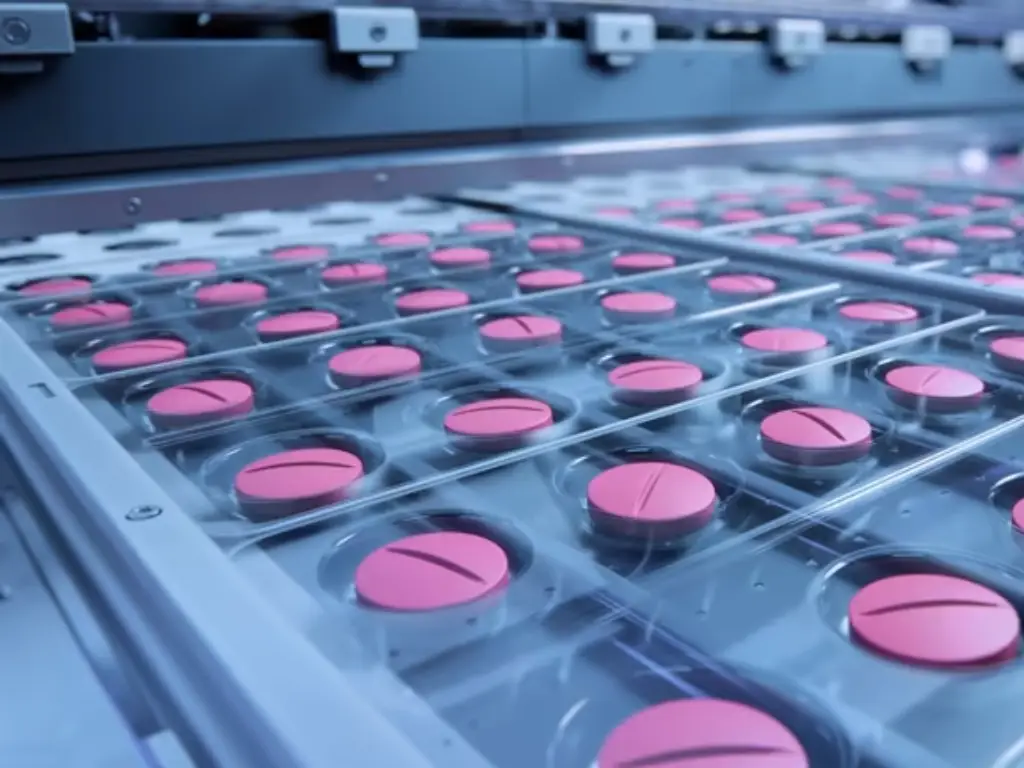
What Is the Tablet Manufacturing Process?
The tablet manufacturing process refers to the series of steps involved in transforming raw powders of active pharmaceutical ingredients (APIs) and excipients into a finished, solid oral dosage form called a tablet. The process ensures that each tablet delivers a consistent dose, maintains physical and chemical stability, and meets pharmacopeial standards for quality, safety, and efficacy.
Broadly, the tablet manufacturing process involves:
Formulation and raw material selection
Weighing and dispensing
Mixing and granulation (wet or dry)
Drying and sizing
Blending and lubrication
Compression into tablets
Optional coating
Packaging and quality control
Each stage must be performed under controlled environmental conditions with documented procedures and validated equipment to ensure compliance with GMP.
Step 1: Formulation and Raw Material Selection
The tablet manufacturing process begins with formulation development — the art and science of selecting the right combination of active and inactive ingredients to produce an effective, stable, and manufacturable product.
Key Components:
Active Pharmaceutical Ingredient (API): The therapeutic substance responsible for the tablet’s intended effect.
Excipients: Non-active substances added to support the manufacturing process and ensure tablet performance. These include:
Diluents or fillers (e.g., lactose, microcrystalline cellulose)
Binders (e.g., povidone, starch paste)
Disintegrants (e.g., croscarmellose sodium)
Lubricants and glidants (e.g., magnesium stearate, talc)
Coloring and flavoring agents
GMP Focus:
All materials must be sourced from qualified vendors with Certificates of Analysis (CoA).
Materials are quarantined upon receipt until tested and approved by the Quality Control department.
Storage conditions must prevent contamination or degradation.
Proper formulation ensures that tablets meet performance standards like hardness, disintegration time, and dissolution rate throughout the product’s shelf life.
Step 2: Weighing and Dispensing
Accurate weighing and dispensing are critical in the tablet manufacturing process because even small deviations in ingredient quantities can affect dosage accuracy and product quality.
Procedure:
Raw materials are weighed individually according to the master formula.
Separate, dedicated weighing areas prevent cross-contamination.
Calibrated balances are used, and each weighing step is double-checked by authorized personnel.
GMP Focus:
All weights are recorded in batch manufacturing records (BMR).
Containers are labeled with material name, batch number, and weight.
Environmental conditions such as temperature and humidity are monitored.
This step ensures consistency, traceability, and regulatory compliance for every batch produced.
Step 3: Mixing and Granulation
The next stage of the tablet manufacturing process involves mixing and granulation, which improve the flow and compressibility of powders.
a. Mixing:
Initial blending ensures even distribution of the API and excipients. Equipment like double-cone mixers or ribbon blenders is commonly used.
b. Granulation:
Granulation converts fine powders into free-flowing granules. There are three primary methods:
1. Wet Granulation
Powders are mixed with a binder solution to form a damp mass.
The mass is passed through a sieve to form granules.
Granules are then dried to a specific moisture content.
Advantages: Improved flow, compressibility, and content uniformity.
Disadvantages: Not suitable for moisture- or heat-sensitive drugs.
2. Dry Granulation
Powders are compacted into slugs or sheets using a roller compactor.
These compacts are milled and screened into granules.
Advantages: Suitable for moisture-sensitive drugs.
Disadvantages: May result in less uniform granules.
3. Direct Compression
Powders are blended and directly compressed into tablets without granulation.
Advantages: Simplified process, cost-effective.
Disadvantages: Requires excellent flow and compressibility properties.
GMP Focus:
Equipment must be cleaned and validated before use and also implementing Key Quality Metrics (KQMs)
Binder concentration, mixing time, and drying temperature are critical parameters.
Granulation process must be validated to produce consistent quality granules.
Step 4: Drying
In wet granulation, drying removes excess moisture to achieve the desired granule properties for compression. Common drying equipment includes:
Fluid bed dryers (FBD): Provide uniform drying through controlled airflow.
Tray dryers: Suitable for smaller batches.
Critical Parameters:
Drying temperature and time must be optimized.
Target moisture content is typically 1–2%.
GMP Focus:
Over-drying can cause brittle granules; under-drying can cause sticking during compression.
Record drying parameters for each batch.
Ensure proper air filtration to prevent contamination.
Step 5: Sizing and Sieving
After drying, granules are passed through sieves to achieve a uniform size distribution. This step ensures consistent flow properties and prevents weight variation in tablets.
GMP Focus:
Use pre-validated sieve sizes.
Clean and inspect sieves before and after use.
Maintain sieve logbooks for traceability.
Uniform granule size directly influences tablet hardness, disintegration, and dissolution.
Step 6: Blending and Lubrication
Blending ensures uniform distribution of all ingredients, while lubrication minimizes friction during tablet compression.
Procedure:
Dried granules are blended with disintegrants and glidants.
Lubricant (e.g., magnesium stearate) is added last and blended gently.
GMP Focus:
Over-mixing with lubricant can affect tablet hardness and dissolution.
Blend uniformity testing ensures even API distribution.
Use validated blenders (double cone, octagonal, or bin blender).
This step finalizes the granule mixture before compression.
Step 7: Tablet Compression
Tablet compression is the heart of the tablet manufacturing process. It converts the blended granules into solid tablets using a tablet press.
Equipment:
Single punch press: Used for small-scale production.
Rotary press: Suitable for large-scale manufacturing.
Critical Parameters:
Compression force
Turret speed
Tablet weight, thickness, hardness, and friability
Common Defects:
Capping and lamination: Due to trapped air or poor granule quality.
Picking and sticking: Due to high moisture or inadequate lubrication.
Weight variation: Caused by uneven granule flow.
GMP Focus:
Maintain equipment in good condition and ensure punch-die cleanliness.
Monitor in-process controls such as weight, thickness, and hardness.
Record compression parameters and machine settings in BMR.
Step 8: Tablet Coating (Optional)
Coating is an optional step in the tablet manufacturing process. It improves tablet appearance, stability, and patient compliance.
Types of Coating:
Sugar Coating: Improves taste and appearance but is time-consuming.
Film Coating: Thin polymer film provides moisture protection and color.
Enteric Coating: Protects drug from stomach acid and ensures release in the intestine.
Sustained-Release Coating: Controls drug release over an extended period.
GMP Focus:
Coating solution must be freshly prepared and filtered.
Coating parameters (airflow, temperature, spray rate) must be controlled.
Uniform coating thickness ensures consistent performance.
Proper coating not only enhances aesthetics but also contributes to tablet stability and efficacy.
Step 9: Printing, Packaging, and Labeling
The final step of the tablet manufacturing process is packaging. Packaging protects tablets from moisture, light, oxygen, and mechanical damage during transportation and storage.
Packaging Materials:
Blister packs (PVC/PVDC with aluminum foil)
Strip packs
HDPE bottles with desiccants
GMP Focus:
Use packaging materials that meet pharmacopeial standards.
Printing must include product name, batch number, manufacturing and expiry dates.
Perform line clearance to avoid mix-ups.
Proper packaging ensures the product’s stability throughout its shelf life and enhances patient safety.
Step 10: Quality Control and Assurance
Quality control (QC) and quality assurance (QA) are integral parts of the tablet manufacturing process.
In-Process Testing:
Granule moisture content
Tablet weight variation
Hardness and thickness
Disintegration and dissolution
Finished Product Testing:
Assay and content uniformity
Friability and stability testing
Microbial limit testing (for uncoated tablets)
GMP Focus:
Every batch must pass QC tests before release.
QA ensures all deviations are documented and investigated.
Ongoing stability studies are conducted throughout the product’s life cycle.
Step 11: Documentation and Validation
Documentation is the backbone of GMP compliance in the tablet manufacturing process.
Essential Records:
Standard Operating Procedures (SOPs)
Equipment logs and cleaning records
Deviation and CAPA reports
Validation Types:
Process Validation: Confirms that the manufacturing process consistently produces quality tablets.
Cleaning Validation: Ensures equipment is free from residual contamination.
Analytical Method Validation: Confirms accuracy and precision of testing methods.
Without proper documentation and validation, even the most advanced processes can fail regulatory audits.
Step 12: Storage and Distribution
Finished tablets are stored in controlled environments before being distributed to the market.
GMP Focus:
Maintain temperature and humidity within specified limits.
Implement First-Expired-First-Out (FEFO) system.
Protect tablets from contamination or mix-ups during handling.
Proper storage maintains product stability and quality until it reaches the end user.
Good Manufacturing Practice (GMP) in Tablet Manufacturing
GMP ensures that every product is consistently produced and controlled according to quality standards. In the tablet manufacturing process, GMP covers:
Facility Design: Separate areas for dispensing, granulation, compression, and packaging.
Personnel Training: Operators trained in hygiene and equipment handling.
Equipment Qualification: Installation (IQ), Operational (OQ), and Performance Qualification (PQ).
Process Validation: Ensures repeatable and reliable results.
Change Control: Every change in material or process must be documented.
Deviation Handling and CAPA: Deviations investigated and corrective actions implemented.
Regular Audits: Internal and external audits ensure continuous compliance.
Following GMP minimizes risks such as contamination, mix-ups, and defective products, safeguarding patient health and brand reputation.
Advantages of a Well-Designed Tablet Manufacturing Process
Consistent dosage and therapeutic effect
Improved production efficiency and yield
Reduced batch failures and rejections
Better compliance with regulatory standards
Enhanced patient confidence in product quality
Common Problems and Solutions in Tablet Manufacturing
| Problem | Possible Cause | Solution |
|---|---|---|
| Capping | Air entrapment, poor granule quality | Optimize granulation and compression force |
| Sticking | Excess moisture, insufficient lubrication | Dry granules properly, add suitable lubricant |
| Weight Variation | Uneven flow, worn dies | Check flow properties, replace tooling |
| Poor Hardness | Low binder content | Adjust binder level, compression pressure |
| Slow Disintegration | Excess lubricant, hard tablet | Optimize formulation and compression |
By monitoring critical process parameters and maintaining proper equipment, most of these issues can be prevented.
Conclusion
The tablet manufacturing process is a carefully controlled sequence that transforms powders into high-quality, patient-friendly tablets. Each stage—from formulation to packaging—plays a critical role in ensuring the final product’s safety, efficacy, and stability.
Adherence to Good Manufacturing Practices is essential at every step. Proper documentation, process validation, and quality checks guarantee consistency and regulatory compliance. Whether a company manufactures millions of tablets per day or operates on a smaller scale, a robust tablet manufacturing process ensures the same outcome: safe, effective, and reliable medicines.
Understanding this process not only helps professionals improve manufacturing efficiency but also strengthens the foundation of pharmaceutical quality systems and also for the pharma jobs in india.
Frequently Asked Questions (FAQ)
1. What is the tablet manufacturing process?
It is the step-by-step procedure of converting raw drug powders into solid tablets through granulation, compression, coating, and packaging under GMP conditions.
2. What are the main stages of the tablet manufacturing process?
The main stages include formulation, weighing, granulation, drying, blending, compression, coating, packaging, and quality control.
3. Why is granulation important in tablet manufacturing?
Granulation improves powder flow, compressibility, and uniformity, ensuring consistent tablet weight and content.
4. What is direct compression in tablet manufacturing?
Direct compression is a simplified process where powders are blended and directly compressed into tablets without prior granulation.
5. What are common tablet defects?
Capping, lamination, sticking, chipping, weight variation, and poor hardness are common defects that can occur during manufacturing.