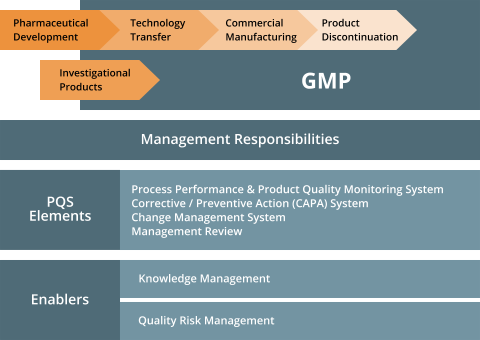
In the highly regulated pharmaceutical industry, even the smallest modification can have a significant impact on product quality, patient safety, and regulatory compliance. A minor change in raw material source, equipment settings, analytical methods, or documentation can lead to deviations, recalls, or regulatory observations if not managed properly. This is where Change control in pharma becomes a critical pillar of the Pharmaceutical Quality Management System (PQMS).
Change control is not merely a documentation exercise; it is a structured, risk-based system that ensures all changes are evaluated, approved, implemented, and reviewed in a controlled manner. Regulatory authorities worldwide expect pharmaceutical companies to have a robust and well-documented change control process aligned with Good Manufacturing Practices (GMP).
This step-by-step implementation guide explains Change control in pharma in practical detail, covering regulatory expectations, classification of changes, workflow, documentation, common challenges, and best practices. Whether you are a process engineer, QA professional, or quality head, this guide will help you design, implement, or improve your change control system.

What Is Change Control in Pharma?
Change control in pharma is a formal system used to manage any planned modification that may affect pharmaceutical products, processes, equipment, facilities, utilities, analytical methods, computerized systems, or quality documentation.
The objective of change control is to:
Ensure changes are scientifically justified
Evaluate risks before implementation
Maintain product quality, safety, and efficacy
Ensure continued compliance with GMP and regulatory filings
Changes can be planned (intentional improvements or optimizations) or unplanned (resulting from deviations, failures, or supply constraints). In both cases, a structured change control system ensures traceability and accountability.
Regulatory Expectations for Change Control
Global regulatory agencies emphasize effective change management as a core quality system element.
Key guidelines include:
ICH Q10 – Pharmaceutical Quality System
US FDA 21 CFR Parts 210 & 211
WHO GMP Guidelines
EU GMP Chapter 1 (Pharmaceutical Quality System)
ICH Q10 clearly states that Change control in pharma should ensure continual improvement while maintaining a state of control. Regulators often assess change control effectiveness during audits, focusing on risk assessment quality, impact evaluation, and post-implementation review.
Types of Changes in Pharmaceuticals
Understanding the type of change is essential for determining review depth and approval requirements.
1. Minor Changes
Minor changes have minimal impact on product quality or regulatory filings.
Examples:
Editorial updates to SOPs
Minor equipment part replacement with identical specifications
Administrative document updates
2. Major Changes
Major changes can significantly impact product quality, validation status, or regulatory commitments.
Examples:
Change in formulation composition
Manufacturing process parameter changes
New equipment installation
Change in critical raw material supplier
3. Emergency Changes
Emergency changes are implemented to prevent immediate risk to product quality or patient safety.
Examples:
Equipment breakdown requiring urgent replacement
Sudden discontinuation of approved vendor
Even emergency changes must follow Change control in pharma, with retrospective documentation and justification.
Scope of Change Control in Pharma
A comprehensive change control system typically covers:
Manufacturing processes
Equipment and instruments
Utilities (HVAC, water systems, compressed air)
Raw and packaging materials
Analytical methods
Computerized systems
Facilities and layouts
Quality documents (SOPs, BMRs, specifications)
Regulatory commitments
Any element that can affect Critical Quality Attributes (CQAs) must be included under Change control in pharma.
Step-by-Step Implementation Guide
Step 1: Change Identification and Initiation
Every change begins with identification. The initiator raises a Change Control Request (CCR) describing:
Reason for change
Description of current and proposed state
Justification (technical, quality, or business)
Affected products, processes, or documents
At this stage, Change control in pharma emphasizes clarity and completeness. Poorly defined change requests often lead to delays and rejections.
Step 2: Preliminary Screening
Quality Assurance (QA) performs an initial screening to verify:
Whether the change falls under change control
If similar changes exist historically
Whether the request is complete
Changes that are not applicable may be redirected to document control or deviation management systems.
Step 3: Change Classification
The change is classified as minor, major, or emergency based on:
Impact on product quality
Regulatory filing implications
Validation and qualification requirements
Accurate classification is critical in Change control in pharma because it determines the depth of review, approval hierarchy, and regulatory notification requirements.
Step 4: Risk Assessment
Risk assessment is the backbone of Change control in pharma.
Common tools include:
Failure Mode and Effects Analysis (FMEA)
Risk ranking and filtering
HACCP principles
Key questions addressed:
What can go wrong?
What is the severity of impact?
How likely is the failure?
Can the risk be detected?
Risk assessment outcomes guide control measures and validation strategies.
Step 5: Impact Assessment
Impact assessment evaluates how the change affects:
Product quality and safety
Process capability
Validation status
Stability studies
Regulatory submissions
Ongoing batches
In Change control in pharma, impact assessment must be cross-functional, involving QA, Production, Engineering, QC, Regulatory Affairs, and sometimes Supply Chain.
Step 6: Approval Process
After risk and impact assessments, the change is routed for approval.
Typical approvers include:
Initiating department head
Quality Assurance
Engineering (if applicable)
Regulatory Affairs (for filing impact)
No change may be implemented without documented approval, a fundamental principle of Change control in pharma.
Step 7: Implementation Planning
Once approved, an implementation plan is developed, defining:
Tasks and responsibilities
Timeline
Training requirements
Validation and qualification activities
A well-planned implementation reduces operational disruptions and ensures compliance with Change control in pharma expectations.
Step 8: Validation and Qualification
Depending on the change type, activities may include:
Equipment qualification (IQ/OQ/PQ)
Process validation or revalidation
Cleaning validation
Method validation or verification
Validation ensures the change consistently delivers expected results without compromising quality.
Step 9: Training and Documentation Updates
All affected personnel must be trained before change effectiveness.
Documents to update:
SOPs
Batch Manufacturing Records
Specifications
Validation protocols
Training records are essential evidence during audits of Change control in pharma.
Step 10: Implementation and Monitoring
The change is implemented as per plan. Post-implementation monitoring ensures:
No unintended consequences
Process performance remains within limits
Product quality attributes are maintained
Monitoring data strengthens the effectiveness of Change control in pharma.
Step 11: Post-Implementation Review and Closure
QA performs a final review to confirm:
All actions completed
Validation results acceptable
No new risks introduced
Only after successful review is the change formally closed. This closure step is often closely examined during regulatory inspections.
Documentation Required for Change Control
Typical change control documentation includes:
Change Control Request form
Risk assessment records
Impact assessment reports
Approval signatures
Validation protocols and reports
Training records
Effectiveness check and closure report
Strong documentation demonstrates the robustness of Change control in pharma during audits.
Common Challenges in Change Control
Despite clear guidelines, companies face challenges such as:
Poorly written change justifications
Inadequate risk assessments
Delays due to cross-functional coordination
Over-classification of minor changes
Weak post-implementation reviews
Addressing these gaps improves the maturity of Change control in pharma systems.
Best Practices for Effective Change Control
Establish clear SOPs and templates
Train cross-functional teams regularly
Use risk-based decision-making
Integrate change control with deviation and CAPA systems
Digitize workflows using QMS software
Periodically trend and review change data
These practices strengthen compliance and operational excellence.
Change Control and Continuous Improvement
Change control in pharma is not a barrier to innovation. When implemented effectively, it supports continual improvement by enabling controlled process optimization while maintaining compliance. Mature organizations use change control data to identify improvement opportunities and enhance product robustness.
Conclusion
Change control is a fundamental requirement for maintaining quality, safety, and regulatory compliance in pharmaceutical manufacturing. A structured, risk-based approach ensures that changes are implemented scientifically and responsibly. By following a clear step-by-step process, organizations can transform Change control in pharma from a compliance obligation into a powerful tool for continuous improvement.
A well-executed change control system protects patients, strengthens regulatory confidence, and supports sustainable pharmaceutical operations in an increasingly complex regulatory landscape.
(FAQ) – Change Control in Pharmaceuticals
1. What is the purpose of change control in pharmaceuticals?
The primary purpose of change control in pharmaceuticals is to ensure that any planned or unplanned modification is scientifically evaluated, approved, implemented, and documented without negatively impacting product quality, patient safety, or regulatory compliance. It helps maintain a state of control while allowing continuous improvement.
2. What types of changes require change control in pharma?
Any change that may impact product quality, safety, efficacy, or regulatory commitments requires change control. This includes changes related to manufacturing processes, equipment, utilities, raw materials, analytical methods, facilities, computerized systems, and quality documentation.
3. Who is responsible for initiating a change control?
A change control can be initiated by any authorized employee from production, quality, engineering, QC, regulatory affairs, or other relevant departments. However, Quality Assurance (QA) is responsible for reviewing, approving, and ensuring proper implementation and closure of the change.
4. How is a change classified as minor or major?
Change classification is based on risk and impact assessment.
Minor changes have minimal or no impact on product quality or regulatory filings.
Major changes can affect critical quality attributes, validation status, or regulatory submissions and require extensive evaluation and approvals.
5. What is the role of risk assessment in change control?
Risk assessment is a critical component of change control. It helps identify potential failure modes, assess severity and likelihood of risks, and define control measures. Tools such as FMEA are commonly used to ensure that risks introduced by the change are understood and mitigated.