Yield Optimization is one of the most critical aspects of modern manufacturing, especially in industries like pharmaceuticals, chemicals, and food processing. In a highly competitive environment, companies constantly aim to maximize output while minimizing waste, cost, and inefficiencies. It plays a vital role in ensuring consistent product quality while maintaining operational excellence across the production lifecycle. As market demand increases and regulatory expectations become stricter, organizations are focusing more on improving their yield performance to stay competitive and sustainable.
Yield Optimization refers to the systematic process of improving production efficiency to achieve the highest possible output from given inputs. Whether it’s raw materials, energy, time, or manpower, optimizing yield ensures that every resource is used effectively. It involves analyzing process parameters, identifying bottlenecks, and implementing corrective actions to reduce losses and variability. By adopting a data-driven approach, manufacturers can continuously monitor performance and make informed decisions that lead to better productivity and reduced operational risks.
In today’s era of automation and data-driven decision-making, Yield Optimization is not just a cost-saving tool—it is a strategic advantage that enhances profitability, quality, and compliance. Advanced technologies such as real-time monitoring systems, artificial intelligence, and predictive analytics are further strengthening Yield Optimization practices. These innovations allow companies to detect deviations early, prevent batch failures, and improve overall process reliability. As a result, organizations that prioritize Yield Optimization are better positioned to achieve long-term growth, regulatory compliance, and customer satisfaction.
What is Yield Optimization?
Yield Optimization is the practice of increasing the percentage of usable product obtained from a manufacturing process compared to the total input.
Basic Formula:
Yield (%) = (Actual Output / Theoretical Output) × 100
- Actual Output: Product obtained after processing
- Theoretical Output: Maximum possible output under ideal conditions
A higher yield indicates a more efficient process, while a lower yield signals losses, inefficiencies, or process deviations.

Importance of Yield Optimization
Yield Optimization plays a crucial role in improving manufacturing performance. Its importance can be understood through the following points:
1. Cost Reduction
Efficient Yield Optimization minimizes raw material wastage, reducing overall production costs. It also helps in lowering reprocessing and rework rejection expenses, which can significantly impact the overall budget. By optimizing processes, companies can achieve better financial control and improve operational efficiency.
2. Improved Profit Margins
Higher yield directly increases profitability by maximizing output without increasing input. This allows manufacturers to generate more revenue from the same resources, improving overall business performance. Over time, consistent Yield Optimization can significantly enhance return on investment (ROI).
3. Regulatory Compliance
In industries like pharmaceuticals, Yield Optimization ensures compliance with GMP standards and regulatory expectations. It helps maintain batch consistency, traceability, and proper documentation required by regulatory authorities. This reduces the risk of product recalls, deviations, and compliance-related penalties.
4. Resource Efficiency
Better utilization of materials, utilities, and manpower leads to sustainable manufacturing. Yield Optimization reduces energy consumption, water usage, and material losses, supporting environmental goals. It also improves workforce productivity by streamlining operations and reducing unnecessary efforts.
5. Competitive Advantage
Organizations with strong Yield Optimization practices outperform competitors in cost and quality. They can offer products at competitive prices while maintaining high standards, attracting more customers. Additionally, efficient operations enable faster production cycles and improved market responsiveness.
Yield Optimization in Pharmaceuticals
Yield Optimization is particularly important in pharmaceutical manufacturing due to strict regulatory requirements and high raw material costs.
Key Areas:
- API manufacturing
- Formulation processes
- Granulation and drying
- Filtration and crystallization
Even a small improvement in Yield Optimization can lead to significant cost savings due to the high value of pharmaceutical products.
Factors Affecting Yield Optimization
Several factors influence Yield Optimization in manufacturing processes. Understanding and controlling these factors is essential to achieve consistent and high production efficiency.
1. Raw Material Quality
Variability in raw materials can significantly impact yield. Differences in purity, particle size, moisture content, or supplier quality may lead to inconsistent results. Proper vendor qualification, incoming material testing, and standardization help maintain consistent Yield Optimization.
2. Process Parameters
Temperature, pressure, pH, and agitation speed directly affect reaction efficiency. Even small deviations in these parameters can reduce product output or create impurities. Continuous monitoring and tight control of critical process parameters are essential for effective Yield Optimization.
3. Equipment Efficiency
Poorly maintained equipment can lead to losses and reduced yield. Issues like leakage, improper mixing, fouling, or wear and tear can negatively impact performance. Regular maintenance, calibration, and validation of equipment ensure smooth operations and better Yield Optimization.
4. Human Error
Operational mistakes can reduce Yield Optimization effectiveness. Errors in material handling, incorrect parameter settings, or deviation from standard procedures can lead to losses. Proper training, clear SOPs, and automation can help minimize human errors.
5. Process Design
Inefficient process design leads to unnecessary losses and lower yield. Poorly designed systems may result in excessive waste, longer cycle times, or incomplete reactions. Optimizing process flow, equipment selection, and material handling improves overall Yield Optimization.
Types of Yield in Manufacturing
Understanding different types of yield is essential for effective Yield Optimization and performance measurement.
1. Theoretical Yield
Maximum possible output under ideal conditions. It assumes no losses and perfect efficiency, serving as a benchmark for comparison. It is useful for evaluating how far the actual process deviates from ideal conditions.
2. Actual Yield
Real output obtained from the process. It reflects the practical performance of a manufacturing system after considering all losses. Comparing actual yield with theoretical yield helps identify inefficiencies.
3. Percentage Yield
Efficiency measurement used in Yield Optimization. It shows how much of the theoretical output is actually achieved. A higher percentage yield indicates better process performance and control.
4. First Pass Yield (FPY)
Percentage of products manufactured correctly without rework. It measures process quality and efficiency at the initial stage. Higher FPY means fewer defects and reduced need for corrections.
5. Rolled Throughput Yield (RTY)
Probability of a product passing through all steps without defects. It considers the cumulative effect of multiple process stages. RTY provides a more realistic view of overall process efficiency and Yield Optimization.
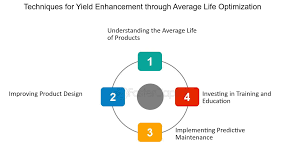
Techniques for Yield Optimization
Effective Yield Optimization requires a combination of strategies, tools, and continuous improvement practices. Organizations must adopt a systematic approach that includes process control, data analysis, and technological advancements.
By implementing techniques such as process optimization, automation, real-time monitoring, and quality control systems, manufacturers can significantly improve their yield performance. In addition, integrating Lean Manufacturing and Six Sigma methodologies helps reduce waste, minimize variability, and enhance overall efficiency.
A proactive approach to Yield Optimization not only improves productivity but also ensures long-term sustainability, regulatory compliance, and competitive advantage in the market.
1. Process Optimization
Fine-tuning process parameters improves reaction efficiency and reduces losses.
- Optimize temperature and pressure
- Control reaction time
- Maintain proper mixing
2. Raw Material Standardization
Consistency in raw materials improves Yield Optimization.
- Vendor qualification
- Raw material testing
- Batch consistency
3. Equipment Calibration and Maintenance
Well-maintained equipment ensures consistent Yield Optimization.
- Regular calibration
- Preventive maintenance
- Equipment validation
4. Automation and Digitalization
Automation reduces human error and enhances Yield Optimization.
- SCADA systems
- PLC controls
- Real-time monitoring
5. Lean Manufacturing
Lean principles help eliminate waste and improve Yield Optimization.
- Reduce non-value-added activities
- Improve workflow efficiency
- Optimize resource usage
6. Six Sigma Methodology
Six Sigma improves Yield Optimization by reducing process variation.
- DMAIC approach
- Statistical analysis
- Defect reduction
7. Process Analytical Technology (PAT)
PAT tools monitor processes in real-time, improving Yield Optimization.
- Real-time data analysis
- Quality control during production
- Reduced batch failures
8. Training and Skill Development
Skilled operators contribute significantly to Yield Optimization.
- SOP training
- Process understanding
- Error reduction
9. Waste Reduction Strategies
Minimizing waste directly improves Yield Optimization.
- Recycling solvents
- Reducing rework
- Minimizing rejects
10. Continuous Improvement
Yield Optimization is an ongoing process.
- Regular audits
- Data analysis
- Process improvements
Yield Optimization Tools
Several tools are used to enhance Yield Optimization by improving process control, identifying inefficiencies, and reducing variability. These tools help manufacturers make data-driven decisions and achieve consistent performance.
Statistical Process Control (SPC)
Statistical Process Control (SPC) monitors process stability and variation using statistical methods. It helps detect deviations in real time through control charts and trend analysis. By identifying abnormal variations early, SPC enables corrective actions before defects occur, thereby improving Yield Optimization and maintaining consistent product quality.
Root Cause Analysis (RCA)
Root Cause Analysis (RCA) identifies the underlying causes of yield loss or process failures. Instead of treating symptoms, RCA focuses on eliminating the core problem permanently. Techniques such as Fishbone Diagram (Ishikawa) and 5 Whys are commonly used. Effective RCA significantly improves Yield Optimization by preventing recurring issues.
Design of Experiments (DOE)
Design of Experiments (DOE) is a systematic approach to optimizing process parameters. It evaluates the relationship between multiple variables and their impact on output. DOE helps identify the most critical factors affecting yield and determines optimal operating conditions. This leads to improved process efficiency and enhanced Yield Optimization.
Failure Mode and Effects Analysis (FMEA)
Failure Mode and Effects Analysis (FMEA) predicts and prevents potential failures in a process. It evaluates risks based on severity, occurrence, and detection. By identifying high-risk areas in advance, FMEA allows organizations to implement preventive measures. This proactive approach plays a key role in improving Yield Optimization and reducing process risks.
Benefits of Yield Optimization
Implementing Yield Optimization offers numerous advantages:
- Increased production efficiency
- Reduced operational costs
- Improved product quality
- Enhanced regulatory compliance
- Better resource utilization
- Higher customer satisfaction
Challenges in Yield Optimization
Despite its many benefits, Yield Optimization faces several practical challenges in real-world manufacturing environments. Understanding these challenges is essential for implementing effective solutions and achieving sustainable improvements.
1. Process Complexity
Complex processes are harder to optimize. Many manufacturing operations involve multiple stages, variables, and interdependencies, making it difficult to identify the exact cause of yield loss. Additionally, changes in one part of the process can impact other stages, requiring a holistic and well-coordinated approach to Yield Optimization.
2. Data Availability
Lack of real-time data limits optimization efforts. Without accurate and timely data, it becomes difficult to monitor process performance and identify deviations. Many traditional systems rely on manual data collection, which can lead to errors and delays. Implementing digital tools and real-time monitoring systems is crucial for improving Yield Optimization.
3. Resistance to Change
Employees may resist new methods and technologies introduced for Yield Optimization. This resistance often arises due to lack of training, fear of job changes, or comfort with existing processes. Effective communication, proper training programs, and involving employees in improvement initiatives can help overcome this challenge.
4. High Initial Investment
Automation, advanced tools, and digital systems require significant capital investment. Small and medium-sized organizations may find it difficult to allocate such resources initially. However, in the long run, these investments lead to better Yield Optimization, reduced costs, and improved profitability, making them worthwhile.
Yield Optimization vs Process Optimization
| Aspect | Yield Optimization | Process Optimization |
|---|---|---|
| Focus | Maximizing output | Improving process efficiency |
| Goal | Increase yield | Improve performance |
| Scope | Output-based | Process-based |
Both are interconnected and essential for manufacturing excellence.
Best Practices for Yield Optimization
To achieve effective Yield Optimization, follow these best practices:
- Standardize processes
- Monitor key performance indicators (KPIs)
- Use data-driven decision-making
- Implement automation
- Conduct regular audits
- Focus on continuous improvement
Future Trends in Yield Optimization
The future of Yield Optimization is increasingly driven by advanced technologies that enable smarter, faster, and more accurate decision-making. These innovations are transforming traditional manufacturing into highly efficient, data-driven systems.
Artificial Intelligence (AI)
Artificial Intelligence (AI) plays a significant role in improving Yield Optimization through predictive analytics. It can analyze large volumes of process data to identify trends, detect anomalies, and forecast potential failures. This allows manufacturers to take proactive actions, reduce downtime, and improve overall yield performance.
Machine Learning
Machine Learning enhances Yield Optimization by identifying hidden patterns and relationships within process data. It continuously learns from historical and real-time data to optimize process parameters automatically. This leads to improved consistency, reduced variability, and better decision-making over time.
Industry 4.0
Industry 4.0 introduces smart manufacturing systems where machines, sensors, and software are interconnected. These smart factories enable real-time monitoring, automation, and data exchange across the production line. As a result, Yield Optimization becomes more efficient, accurate, and responsive to changes in process conditions.
Digital Twins
Digital Twins are virtual replicas of physical processes or systems used to simulate and analyze performance. They allow manufacturers to test different scenarios, predict outcomes, and optimize processes without affecting actual production. This significantly improves Yield Optimization by reducing risks and enabling continuous improvement.
Real-World Example
In pharmaceutical manufacturing, optimizing crystallization conditions improved Yield Optimization by 15%, reducing waste and increasing profitability significantly.
Conclusion
Yield Optimization is a cornerstone of modern manufacturing, enabling organizations to maximize efficiency, reduce costs, and improve product quality. By implementing effective strategies such as process optimization, automation, and continuous improvement, companies can achieve significant gains in productivity and profitability. It also helps in minimizing waste, improving resource utilization, and ensuring consistent process performance across all stages of production.
In industries like pharmaceuticals, where precision and compliance are critical, Yield Optimization becomes even more essential. It supports adherence to regulatory standards, enhances batch consistency, and reduces the risk of deviations and product failures. Organizations that invest in Yield Optimization not only improve their bottom line but also build stronger quality systems and gain a competitive edge in the market.
As technology transfer in pharma continues to evolve, the future of Yield Optimization looks highly promising, with advanced tools like artificial intelligence, machine learning, and digital twins revolutionizing the way processes are optimized. Companies that embrace these innovations will be better positioned to achieve operational excellence, sustainability, and long-term business success.
Frequently Asked Questions (FAQs)
1. What is Yield Optimization?
Yield Optimization is the process of maximizing output from a manufacturing process while minimizing waste and inefficiencies.
2. Why is Yield Optimization important?
Yield Optimization improves efficiency, reduces costs, and increases profitability.
3. How is Yield Optimization calculated?
Yield Optimization is calculated using:
(Actual Output / Theoretical Output) × 100
4. What industries use Yield Optimization?
Pharmaceuticals, chemicals, food processing, and manufacturing industries widely use Yield Optimization.
5. What tools are used in Yield Optimization?
SPC, DOE, FMEA, and PAT are commonly used tools.
6. How can Yield Optimization be improved?
By optimizing processes, improving raw material quality, and using automation.
7. What is the difference between yield and efficiency?
Yield focuses on output, while efficiency considers overall resource utilization.
8. What is First Pass Yield?
First Pass Yield measures products made correctly without rework.
9. What are the challenges in Yield Optimization?
Process complexity, data limitations, and resistance to change.
10. What is the future of Yield Optimization?
AI, machine learning, and smart manufacturing will drive future improvements.