Continuous manufacturing in pharmaceuticals is rapidly becoming the backbone of modern drug production. With increasing demand for faster production, better quality, and regulatory compliance, pharmaceutical companies are shifting from traditional batch processes to continuous systems.
Unlike batch manufacturing, continuous manufacturing in pharmaceuticals allows uninterrupted production, where raw materials are continuously fed, processed, and converted into finished products. This not only improves efficiency but also ensures consistent product quality.
If your goal is to understand how continuous manufacturing improves pharmaceutical operations and why it is essential for future growth, this guide covers everything in detail.
What is Continuous Manufacturing in Pharmaceuticals?
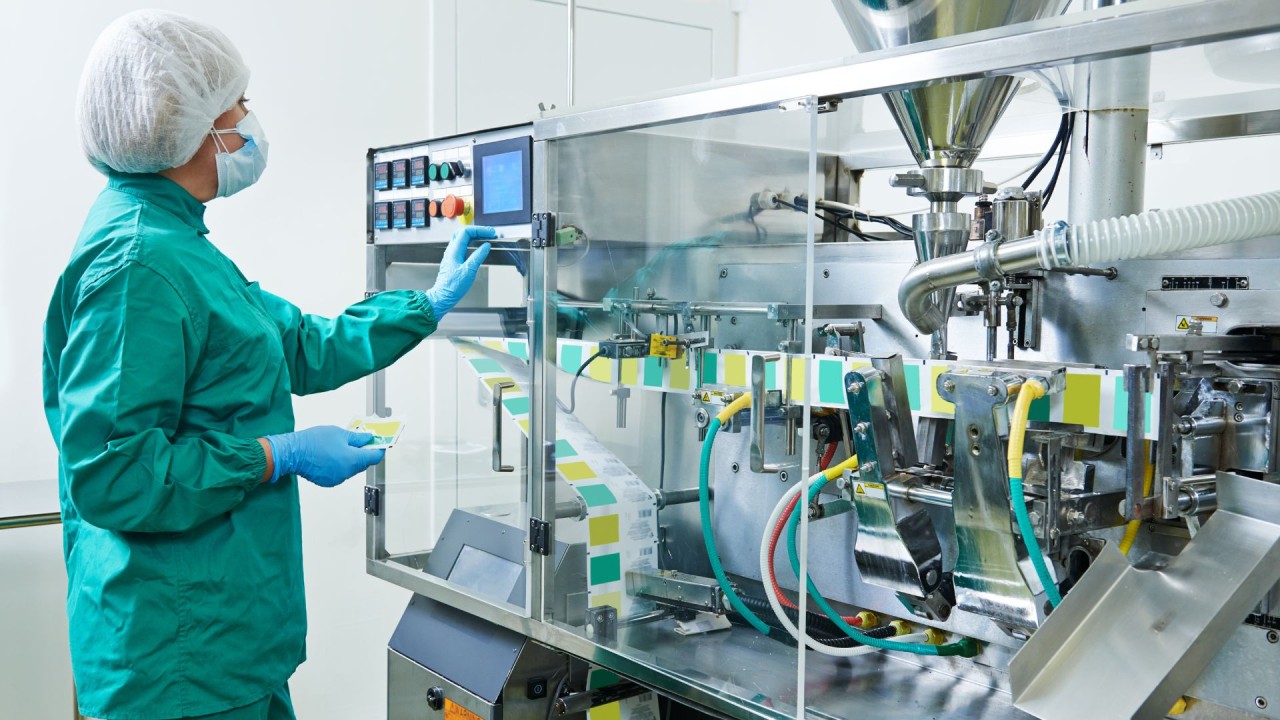
Continuous manufacturing in pharmaceuticals is a production method where materials are constantly fed into a system and processed without interruption to produce finished products. This process integrates multiple manufacturing steps into a single, continuous flow system.
In contrast to batch manufacturing, where each stage is performed separately, continuous manufacturing connects all operations such as mixing, granulation, drying, and compression into one streamlined process. This reduces waiting time between stages and enhances overall productivity. As a result, manufacturers can achieve better control over product quality and consistency.
Key Characteristics:
Continuous input and output
Real-time monitoring
Integrated unit operations
Automation-driven processes
This method eliminates delays between stages and enables faster production cycles.
Why Continuous Manufacturing is Important in 2026
The importance of continuous manufacturing in pharmaceuticals has increased significantly due to industry challenges such as rising costs, strict regulatory requirements, and demand for faster drug delivery. In 2026, pharmaceutical companies are focusing more on efficiency, digital transformation, and sustainability.
Continuous manufacturing supports these goals by enabling real-time monitoring, reducing waste, and improving scalability. It also aligns with modern trends such as personalized medicine and small-batch production. Therefore, companies adopting this technology gain a competitive advantage in the global market.
Faster drug approvals
Personalized medicine
Cost optimization
Digital transformation
Continuous manufacturing in pharmaceuticals supports all these goals efficiently.
How Continuous Manufacturing Works (Step-by-Step)
Continuous manufacturing involves several interconnected steps that operate simultaneously to ensure smooth production flow.
1. Continuous Feeding
In this stage, raw materials are continuously fed into the system using automated feeders. These feeders ensure precise control over material input, which is essential for maintaining product quality and consistency throughout the process.
2. Blending
The raw materials are mixed in continuous blenders to achieve a uniform composition. Proper blending ensures that the active pharmaceutical ingredient (API) is evenly distributed in the formulation, which is critical for dosage accuracy.
3. Granulation
Granulation is performed continuously to improve the flow properties of powders. Depending on the formulation, either wet or dry granulation methods are used. This step enhances the compressibility and stability of the product.
4. Drying
After granulation, the material is dried to remove excess moisture. Continuous dryers, such as fluid bed dryers, are used to maintain optimal moisture levels, which is crucial for product stability.
5. Milling
Milling reduces particle size and ensures uniformity. This step helps in achieving the desired physical properties required for further processing and final product formation.
6. Compression
The processed material is compressed into tablets or filled into capsules. Continuous compression machines ensure high-speed production with consistent weight and hardness.
7. Coating
If required, tablets undergo coating to enhance stability, taste, or appearance. Continuous coating systems allow uniform coating without interrupting the production flow.
8. Packaging
Finally, the finished products are packaged in a continuous manner. Automated packaging systems ensure efficiency and reduce the risk of contamination.
Top 10 Benefits of Continuous Manufacturing in Pharmaceuticals
Continuous manufacturing offers numerous advantages that make it a preferred choice for modern pharmaceutical production.
1. Consistent Product Quality
One of the biggest advantages of continuous manufacturing in pharmaceuticals is consistent product quality. Real-time monitoring systems ensure that every unit produced meets the required standards, reducing variability and defects.
2. Higher Production Efficiency
Continuous processes eliminate downtime between steps, resulting in higher productivity. This allows manufacturers to produce more in less time compared to traditional batch processes.
3. Reduced Manufacturing Time
Since all operations are integrated, production time is significantly reduced. This helps companies respond quickly to market demand.
4. Cost Savings
Continuous manufacturing reduces labor costs, energy consumption, and material waste. Over time, this leads to significant cost savings for pharmaceutical companies.
5. Real-Time Quality Control
Advanced sensors and analytical tools monitor critical parameters during production. This allows immediate detection and correction of any deviations.
6. Flexible Production
Manufacturers can easily adjust production volumes based on demand without major process changes.
7. Smaller Facility Requirement
Continuous systems require less space compared to batch manufacturing setups, making them suitable for compact facilities.
8. Reduced Waste Generation
Optimized processes minimize raw material loss and reduce environmental impact.
9. Faster Time-to-Market
Drugs can be produced and released faster, giving companies a competitive edge.
10. Regulatory Support
Regulatory authorities encourage continuous manufacturing due to improved quality control and traceability.
Continuous Manufacturing vs Batch Manufacturing
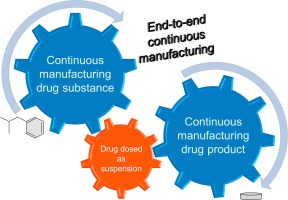
Continuous manufacturing in pharmaceuticals differs significantly from batch manufacturing in terms of efficiency, quality control, and production speed.
In batch manufacturing, each stage is performed separately, which leads to delays and higher chances of variability. On the other hand, continuous manufacturing operates in a seamless flow, ensuring better control and consistency. While batch processes may still be suitable for small-scale production, continuous manufacturing is ideal for large-scale and high-demand products.
| Feature | Continuous Manufacturing | Batch Manufacturing |
|---|---|---|
| Flow | Continuous | Stepwise |
| Efficiency | High | Moderate |
| Quality | Real-time | End testing |
| Cost | Lower long-term | Higher |
| Speed | Fast | Slow |
Key Technologies Used
Continuous manufacturing relies on advanced technologies to ensure smooth operation and high-quality output.
Process Analytical Technology (PAT) plays a crucial role by enabling real-time monitoring of critical parameters. Automation systems reduce human intervention and improve accuracy. Additionally, data analytics and artificial intelligence help optimize processes and predict potential issues. Continuous reactors and advanced control systems further enhance efficiency and reliability.
Challenges in Continuous Manufacturing
Despite its advantages, continuous manufacturing in pharmaceuticals also presents certain challenges.
The initial investment required for setting up continuous systems is high, which may be a barrier for small companies. Process design is complex and requires skilled engineers. Regulatory compliance can also be challenging due to the need for continuous validation. Moreover, training the workforce to operate advanced systems is essential for successful implementation.
1. High Initial Investment
Setup cost is significant.
2. Complex System Design
Requires expert engineering.
3. Regulatory Compliance
Needs detailed validation.
4. Skilled Workforce
Specialized training required.
Future Trends
The future of continuous manufacturing in pharmaceuticals is promising, driven by technological advancements and industry demand.
Artificial intelligence and machine learning will play a major role in process optimization and predictive maintenance. Digital twin technology will allow virtual simulation of processes, improving decision-making. Modular manufacturing systems will enable flexible and decentralized production. Additionally, sustainability initiatives will drive the adoption of eco-friendly manufacturing practices.
AI-driven manufacturing
Digital twin technology
Smart factories
Personalized medicine production
Sustainable manufacturing
Best Practices
Use real-time monitoring tools
Invest in automation
Optimize process control
Train staff effectively
Maintain regulatory compliance
Conclusion
Continuous manufacturing in pharmaceuticals is transforming the industry by offering improved efficiency, consistent quality, and faster production. As technology advances and regulatory support increases, more companies are expected to adopt this approach.
Although challenges exist, the long-term benefits outweigh the initial investment. Continuous manufacturing is not just an innovation—it is the future of pharmaceutical production.
Frequently Asked Questions (FAQ)
1. What is continuous manufacturing in pharmaceuticals?
Continuous manufacturing is a process where raw materials are continuously processed into finished products without interruption.
2. Why is continuous manufacturing important?
It improves efficiency, reduces costs, and ensures consistent product quality.
3. What are the main benefits?
Key benefits include faster production, real-time monitoring, and reduced waste.
4. What are the challenges?
High investment, complex design, and skilled workforce requirements.
5. Is continuous manufacturing approved by regulators?
Yes, regulatory authorities support it due to better control and quality assurance.