Capsules remain one of the most preferred oral dosage forms in modern pharmaceutical manufacturing. They offer ease of swallowing, faster disintegration, superior patient compliance, and enhanced bioavailability for various formulations. As the demand for safe, effective, and high-quality medicines increases, understanding the detailed workflow of capsule manufacturing in pharma is essential for pharmacists, manufacturing chemists, QA/QC officers, regulatory professionals, and students preparing for interviews or academic exams.
This comprehensive guide explains the complete lifecycle of capsule manufacturing in pharma, from raw material selection to encapsulation, polishing, defect identification, inspection, packaging, and regulatory requirements. The article also covers the types of capsules, equipment used at each stage, troubleshooting techniques, and a detailed overview of process validation and in-process checks.
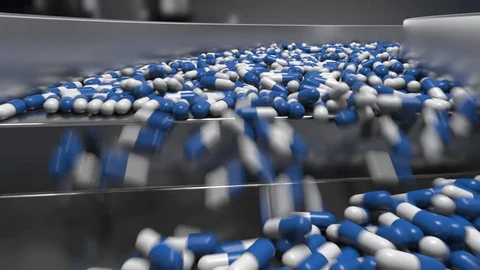
Let’s explore the full process.
1. Overview of Capsules in Pharmaceutical Manufacturing
Capsules are solid dosage forms where the drug is enclosed inside a hard or soft shell. They are particularly useful for moisture-sensitive, bitter, thermolabile, or low-dose potent drugs.
1.1 Types of Capsules
Hard Gelatin Capsules (HGC)
Two-piece capsules
Made of gelatin from animal collagen
Ideal for powders, pellets, blends, and granules
Hard HPMC Capsules
Vegetarian capsules made from Hydroxypropyl Methylcellulose
Suitable for hygroscopic APIs
Preferred for nutraceuticals
Soft Gel Capsules (Softgels)
One-piece hermetically sealed capsules
Used for oils, suspensions, vitamins, omega-3, and lipophilic drugs
The focus of this article is primarily on capsule manufacturing in pharma related to hard gelatin and HPMC capsules, as these dominate prescription and generic drug markets.
2. Raw Materials Used in Capsule Manufacturing
2.1 Capsule Shell Materials
Gelatin / HPMC
Purified water
Plasticizers (glycerin, sorbitol)
Opacifiers (titanium dioxide)
Colorants
Preservatives
2.2 Fill Materials
APIs (Active Pharmaceutical Ingredients)
Excipients
Diluents (lactose, MCC)
Lubricants (magnesium stearate)
Glidants (colloidal silicon dioxide)
Disintegrants (croscarmellose sodium)
Pellets or beads (for modified release)
3. Equipment Used in Capsule Manufacturing in Pharma
Understanding equipment is crucial for smooth capsule manufacturing in pharma. Below is a list of commonly used machines:
3.1 Blending Equipment
Double cone blender
V-blender
Octagonal blender
Bin blender
Used for uniform drug–excipient mixing.
3.2 Granulation Equipment
RMG (Rapid Mixer Granulator)
Fluid Bed Dryer (FBD)
Multimill
Oscillating granulator
3.3 Capsule Filling Machines
Manual Machines
Small-scale, R&D
300–500 capsules per batch
Semi-Automatic Machines
Medium-scale operations
10,000–25,000 capsules/hour
Fully Automatic Machines
Large-scale industrial production
60,000–150,000 capsules/hour
Brands: Bosch, ACG, IMA
3.4 Auxiliary Equipment
Capsule sorter
Deduster
Polishing machine
Metal detector
Capsule weighing machine
Inspection system
3.5 Packaging Equipment
Blister packing machine
Strip packing line
Bottle filling line
Each machine plays a critical role in the consistency and GMP compliance of capsule manufacturing in pharma.
4. Detailed Steps in Capsule Manufacturing in Pharma
Below is a step-by-step, GMP-oriented explanation of how capsules are manufactured in a pharmaceutical facility.

Step 1: Raw Material Dispensing
Raw materials are dispensed in a controlled environment following:
SOPs
Approved BMR (Batch Manufacturing Record)
Weighing balance calibration
Cross-contamination controls
Materials must comply with pharmacopoeial standards (IP/BP/USP/EP).
Step 2: Milling and Sieving
The goal is to:
Reduce particle size
Improve flow properties
Ensure blend uniformity
Equipment: Sifter, multimill, cone mill.
Sieve sizes typically used:
20#, 30#, 40# depending on formulation.
This step is vital for efficient capsule manufacturing in pharma.
Step 3: Blending of API and Excipients
Uniform mixing ensures accurate dose in every capsule.
Blending parameters:
Time
Speed
Load factor (50–70% of blender volume)
Sampling is performed to confirm blend uniformity (RSD < 5%).
Step 4: Lubrication
Lubricants and glidants (e.g., magnesium stearate, aerosil) are blended for a short time to prevent over-lubrication.
Typical lubrication time:
2–5 minutes
Step 5: Capsule Shell Separation
In automated filling machines:
Body and cap are separated mechanically
Body goes for filling
Cap is held for closing
Shell quality checks include:
Moisture content 13–16%
Cap–body locking
Dimension check
Visual inspection
Step 6: Filling of Blend or Pellets
Filling technologies:
Dosator
Dosing disc
Auger filling
Vacuum transfer
Forms filled:
Powders
Pellets
Mini tablets
Beads
Granules
Critical parameters:
Tamping pressure
Dosator height
Machine speed
Fill weight variation
Ensures accuracy during capsule manufacturing in pharma.
Step 7: Capsule Closing
After filling:
The cap is placed over the body
Locking grooves ensure sealing
Improperly closed capsules are automatically rejected
Step 8: Capsule Polishing and Dedusting
Purpose:
Remove powder residues
Improve appearance
Prevent sticking
Ensure cleanliness for packaging
Equipment:
Capsule polisher
Deduster
Air suction system
Step 9: Weight Variation and In-Process Checks
In-process checks (IPC) include:
Fill weight
Shell weight
Total weight
Lock length
Moisture content
Appearance
Sampling frequency:
Every 15–30 minutes.
These checks maintain the quality of capsule manufacturing in pharma at every stage.
Step 10: Visual Inspection
Performed manually or by automated vision systems to detect:
Dented capsules
Cracks
Holes
Color variation
Improper locking
Empty capsules
Step 11: Metal Detection
Checks for:
Ferrous
Non-ferrous
Stainless steel contaminants
Ensures patient safety and compliance with guidelines.
Step 12: Packaging
Common packaging forms:
Blister packs
Alu-Alu packs
Strip packs
HDPE bottles
Packaging is validated for:
Moisture barrier
Stability
Protection from light
Final labelling includes:
Batch No.
Mfg. date
Expiry date
Storage conditions
5. Quality Control Tests for Capsules
QC tests ensure that the final batch complies with pharmacopeial standards.
5.1 Physical Tests
Capsule dimensions
Shell thickness
Moisture content
5.2 Weight Variation
Ensures dose uniformity.
5.3 Disintegration Test
Hard gelatin capsules typically disintegrate within 5–20 minutes.
5.4 Dissolution Test
Determines drug release profile.
5.5 Assay and Content Uniformity
Ensures correct API strength.
5.6 Microbial Limit Tests
Especially critical for herbal and nutraceutical capsules.
6. Common Defects in Capsule Manufacturing in Pharma
Understanding defects improves troubleshooting and ensures consistent quality.
6.1 Dented or Deformed Capsules
Causes:
Excess humidity
Poor storage
Machine misalignment
6.2 Body-Cap Separation
Causes:
Improper locking
Overfilled capsules
Wrong shell size
6.3 Weight Variation Issues
Causes:
Poor blending
Inconsistent powder flow
Incorrect dosator settings
6.4 Cracked Capsules
Causes:
Brittle shells due to low moisture
High machine speed
6.5 Empty Capsules
Causes:
Vacuum failure
Powder bridging
6.6 Sticking and Smudging
Causes:
Excess fines
Static charge
High humidity
Defect analysis is an integral part of capsule manufacturing in pharma to maintain GMP compliance.
7. cGMP and Regulatory Requirements
Key Guidelines
US FDA 21 CFR Part 210/211
EU GMP
WHO GMP
ICH guidelines
Pharmacopeial standards
Compliance Areas
Controlled environment
Documented procedures
Equipment calibration
Process validation
Cleaning validation
Data integrity
Environmental monitoring
Each requirement strengthens the reliability of capsule manufacturing in pharma.
8. Process Validation in Capsule Manufacturing
8.1 Types of Validation
Prospective
Concurrent
Retrospective
Re-validation
8.2 Key Validation Steps
URS and DQ
IQ, OQ, PQ
Blend uniformity validation
Filling weight validation
Cleaning validation
9. Stability Studies
Performed as per ICH guidelines:
Long term (25°C/60% RH)
Accelerated (40°C/75% RH)
Evaluates:
Integrity
Color change
Drug potency
Dissolution profile
10. Documentation Requirements
Essential GMP documents:
BMR (Batch Manufacturing Record)
BPR (Batch Packaging Record)
SOPs
Logbooks
Calibration records
Validation protocols
Deviation reports
Conclusion
Capsule manufacturing in pharma is a structured, precise, and highly regulated process requiring strict adherence to cGMP principles. From raw material dispensing to encapsulation, polishing, inspection, and packaging, each step demands accuracy, monitoring, and control to ensure patient safety and product efficacy. Understanding equipment, handling defects, and performing in-process checks are essential for producing high-quality capsules consistently. Whether you are a student, QA/QC executive, production officer, or manufacturing chemist, mastering capsule manufacturing like tablet manufacturing process is essential for career growth in the pharmaceutical industry.
FAQs
1. What is capsule manufacturing in pharma?
It is the complete process of producing hard or soft capsules containing APIs using blending, encapsulation, polishing, inspection, and packaging operations.
2. Which capsule type is most commonly used?
Hard gelatin capsules are the most widely used due to ease of production and cost-effectiveness.
3. What is the ideal moisture content of capsule shells?
Typically 13–16% to maintain flexibility and prevent brittleness.
4. What equipment is used in capsule manufacturing?
Blenders, RMG, FBD, capsule filling machines, polishers, metal detectors, and packaging lines.
5. What defects occur during capsule filling?
Common defects include weight variation, body-cap separation, cracks, dents, empty capsules, and sticking.